Begin amidst the ghostly arches of this 11th-century church, built into the Roman city wall and gutted in the Blitz, where the surviving tower now frames a sunken garden on the line of Cripplegate. Touch the flint-and-rubble masonry as a tactile link to Norman London and imagine processions passing through the long-vanished Saxon “cruplegate” tunnel.
Address: St Alphage London Wall, London Wall, London EC2Y 5DE, United Kingdom
Relaxed Aussie cafe for all-day eats with huge windows opening on to the ruins of London Wall.
Address: 2 London Wall Pl, Barbican, London EC2Y 5AU
How to Find:
Opposite the ruins
This tour tells the origin story of the ancient City of London: how this small square mile set itself apart from Westminster, defied royal authority, and rose to become the financial capital of the world… City of London Historical Walking Tour
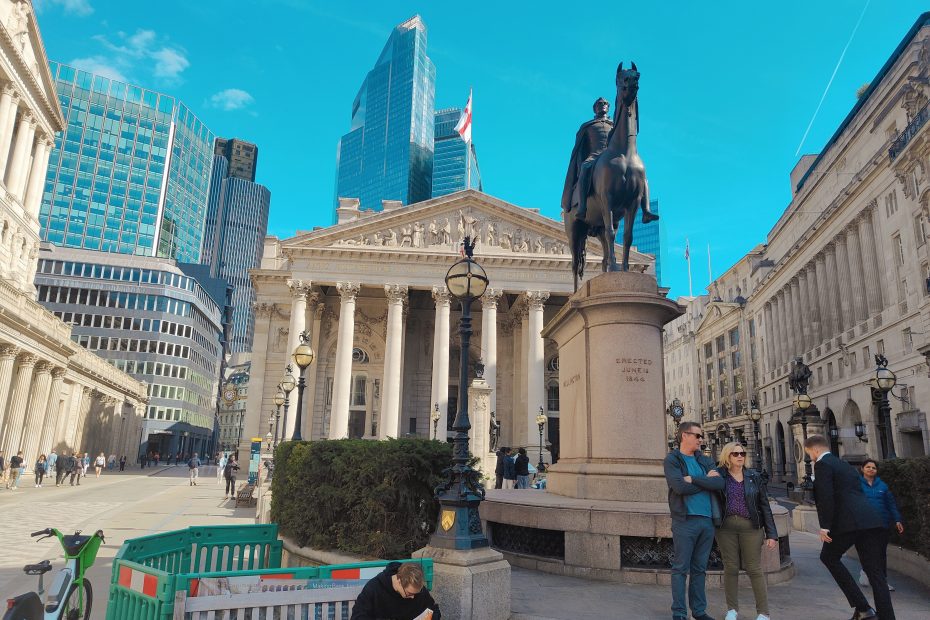
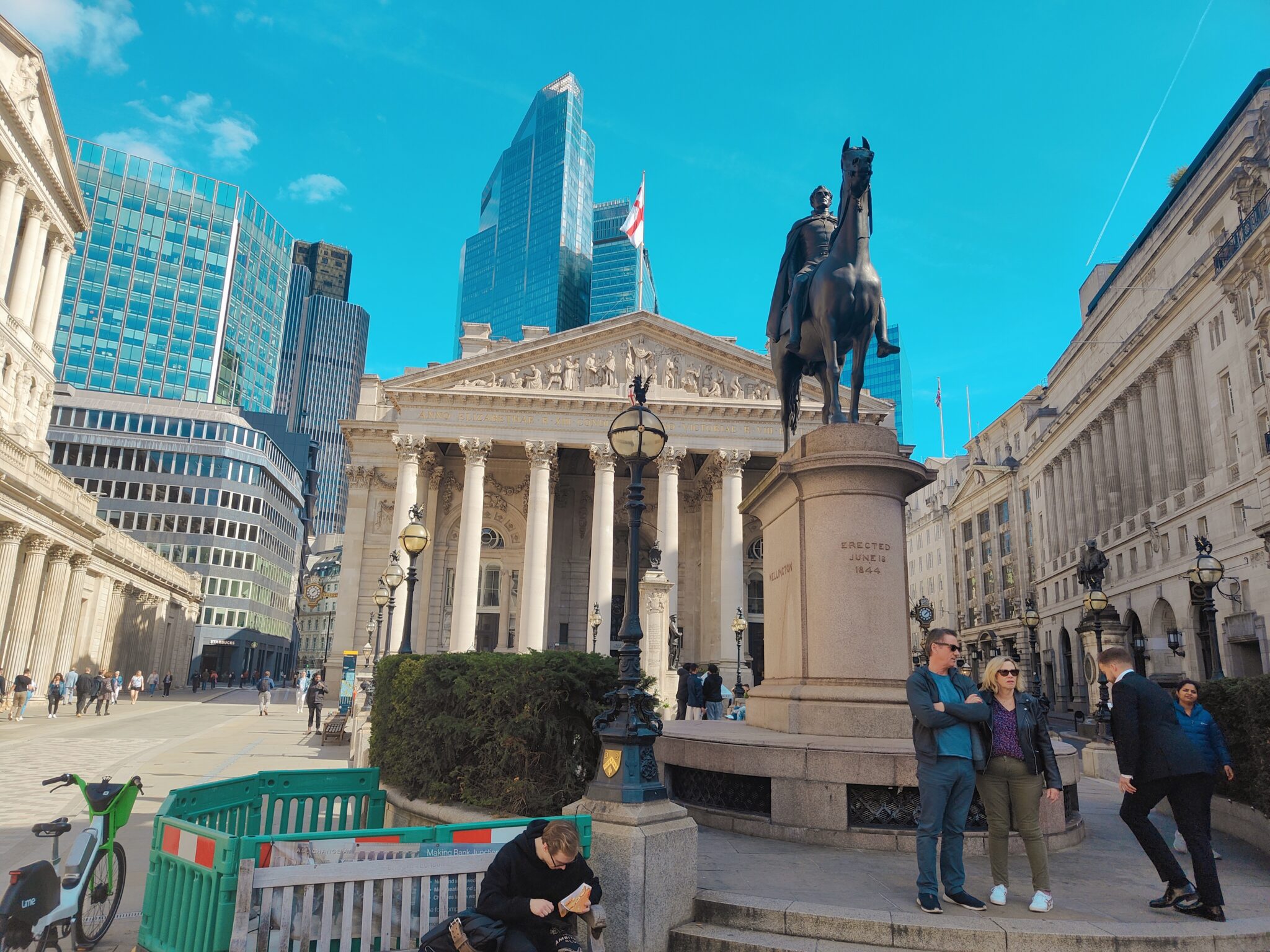
Address: 1 Royal Exchange, London EC3V 3DG.
Address: 95 Cannon St, City of London, London EC4N 5AE
Explore the City of London as you’ve never seen it before—a place where ancient gods, medieval merchants and modern bankers all share the same streets. On this immersive walking tour, you’ll trace the evolution of… City of London History of Money & Power Walking Tour
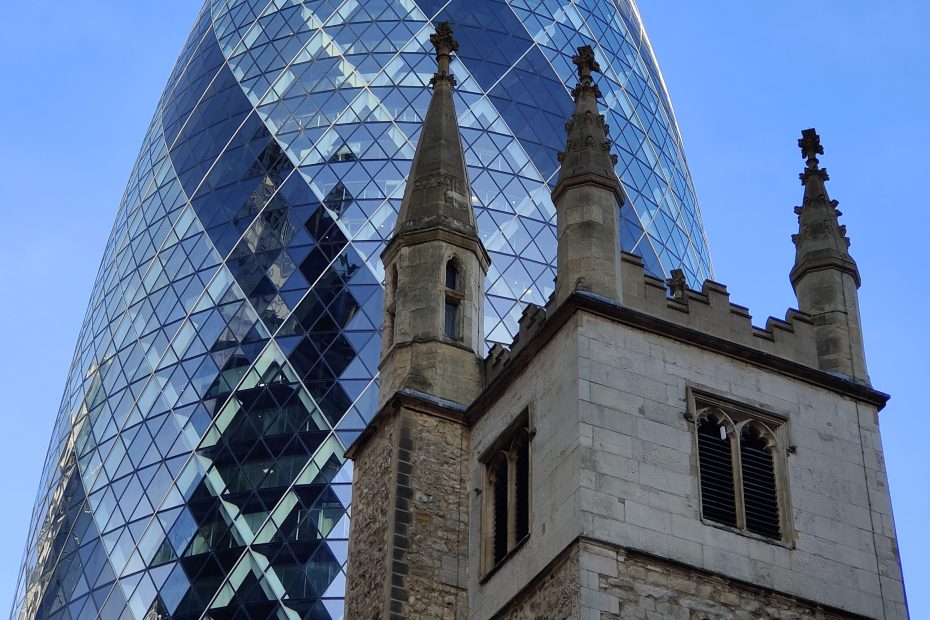
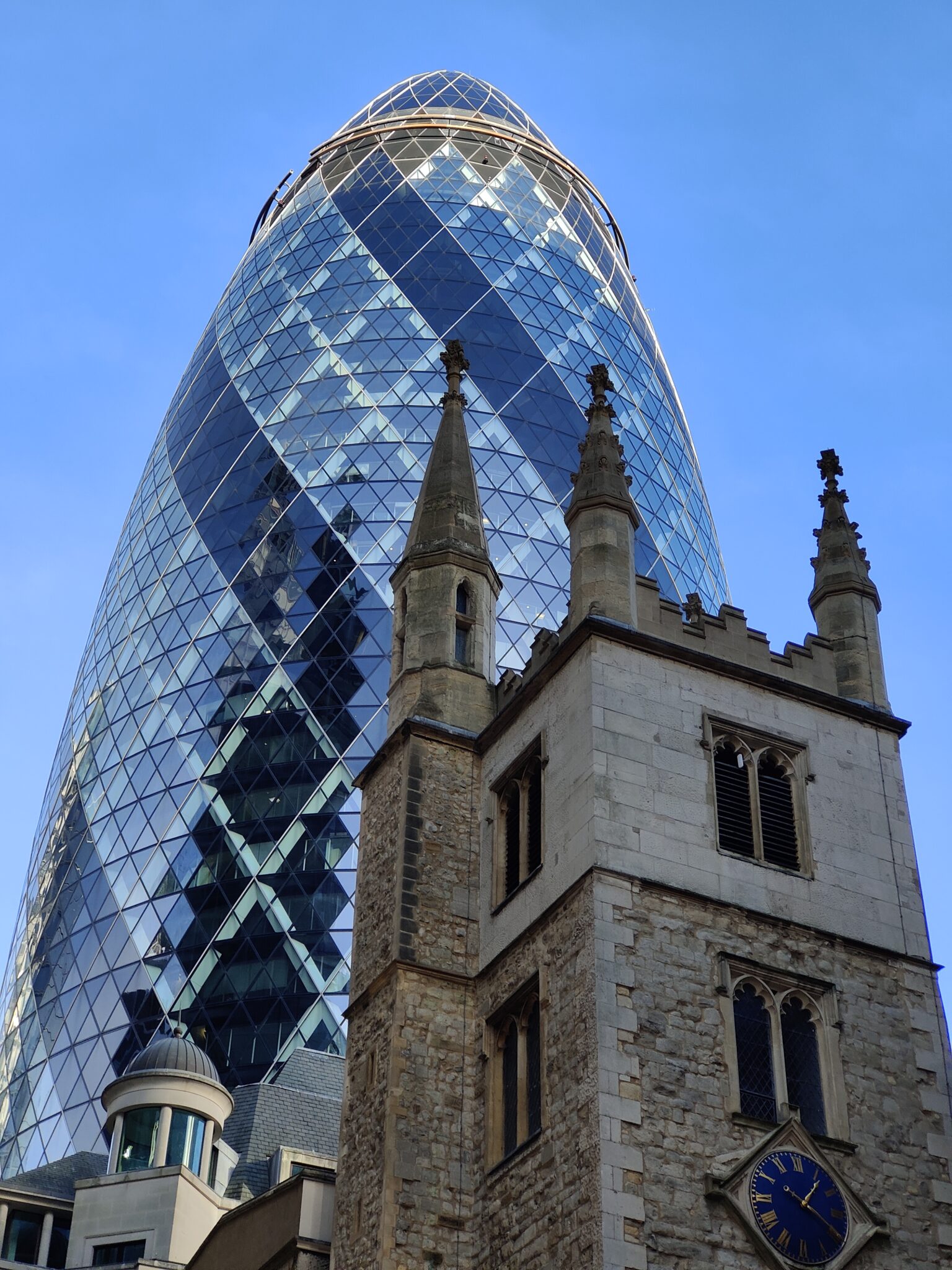
Rising in the heart of London’s financial district, the Gherkin anchors a cluster of major international banks, trading floors and financial institutions, symbolising the City’s role as a leading global money hub.
Address: 30 St Mary Axe, London EC3A 8BF, United Kingdom
St Helen’s Bishopsgate is a large medieval parish church tucked behind Bishopsgate and overshadowed today by City skyscrapers, including the Gherkin. It is unusual in having a double‑nave plan: a parish church and a Benedictine nuns’ church were built side by side in the 13th century, later opened up into one long interior with arcades between them.
The church is one of the few in the City to have survived both the Great Fire of 1666 and the Blitz, earning a reputation as a “tough survivor” amid repeated damage and restoration, most recently after IRA bombs in 1992 and 1993. Inside, St Helen’s contains more monuments than any other London church except Westminster Abbey, leading some to call it the “Westminster Abbey of the City”.
Address: St Helen’s Bishopsgate, Great St Helen’s, London EC3A 6AT, United Kingdom
Interesting Facts:
-
Double‑nave layout from a medieval nunnery
Double‑nave layout from a medieval nunnery
-
“Westminster Abbey of the City”
St Helen’s contains more than 50 wall monuments and grand tombs, including four large recumbent effigies from the 14th to 17th centuries and elaborate Elizabethan altar tombs. This density and quality of memorials has led to it being nicknamed the “Westminster Abbey of the City”, second only to the Abbey itself in monument numbers.
-
A rare triple survivor: Fire, Blitz and bombs
The church is one of the very few City churches to survive the Great Fire of 1666, major bomb damage in the Second World War and two IRA bombs in 1992 and 1993 that shattered windows and damaged the structure. A 1990s restoration by architect Quinlan Terry re‑ordered the interior while preserving most of the historic fabric and monuments.
-
Shakespeare’s parish church
When William Shakespeare lived and worked in the Bishopsgate area in the 1590s, St Helen’s was his local parish church, and his name appears in the parish rate books. This makes it one of the key surviving churches directly linked to the playwright’s life in London.
Striking murals that confront London’s colonial past and expose the City’s financial entanglement with transatlantic trade and slavery along a narrow back street.
Address: Plantation Lane, City of London, London EC3R, United Kingdom
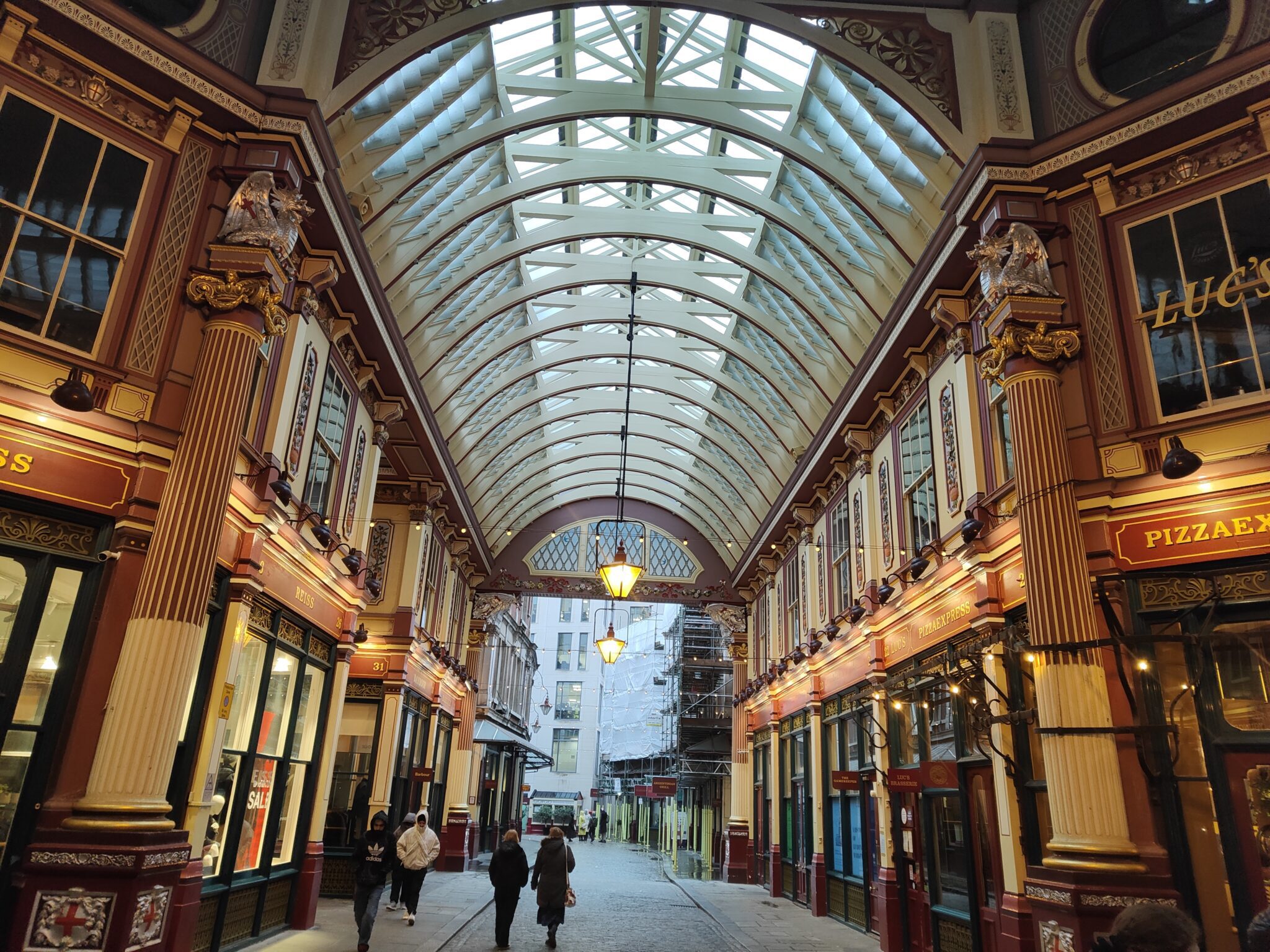
Leadenhall Market is a covered Victorian market tucked between Gracechurch Street and Leadenhall Street, in the heart of the City of London’s old financial and commercial district. Its current wrought‑iron and glass arcades, designed by City Architect Sir Horace Jones in the 1880s, sit on a site that has been used for trading since at least the 14th century and lies over part of Roman Londinium’s former forum and basilica. Once a major meat, poultry and game market serving medieval and early modern London, it is now home to boutiques, pubs, restaurants and cafés beneath richly painted roofs and cobbled walkways. Grade II‑listed and often used as a film location, it offers one of the most atmospheric historic streetscapes in the Square Mile.
Address: Leadenhall Market, Gracechurch Street, London EC3V 1LT, United Kingdom