Mansion House
This grand Palladian-style building completed in 1752 is home to the Lord Mayor of London
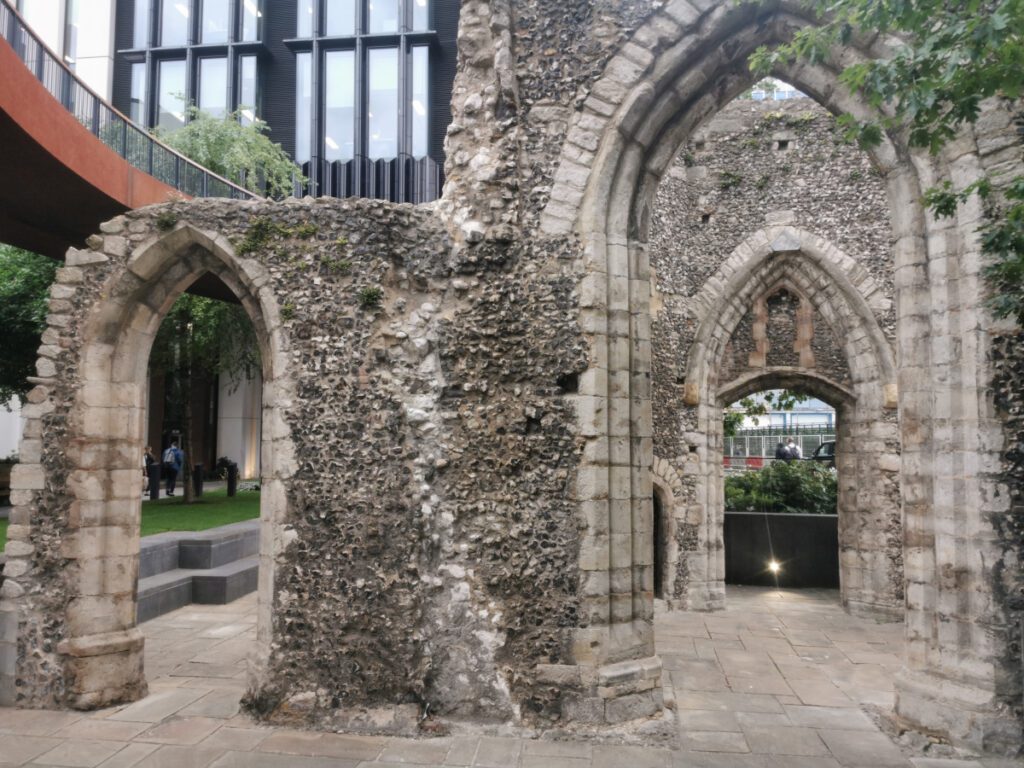
Elsyng Spital Church Tower
Minotaur Statue

St Lawrence Jewry
Wren’s “parish church of the Corporation”, rebuilt in the 1670s beside Guildhall, with gold-leafed ceilings and bright classical interiors that mirror the confidence of a reborn mercantile city.
Guildhall Art Gallery & Roman Amphitheatre
Descend to the remains of Londinium’s Roman amphitheatre, uncovered in 1988 where crowds of around 7,000 once gathered, then return upstairs to Victorian canvases that dramatise the City’s global reach.
St Margaret Lothbury
Step into Wren’s “boardroom chapel”, where a 1670s interior of walnut panelling and Grinling Gibbons carving frames a space steeped in merchant piety, with donors’ crests in stained glass forming a corporate pantheon.
Guildhall
For centuries Guildhall has served as the City of London’s town hall, and it still functions as the Corporation’s ceremonial and administrative heart, hosting banquets, elections and historic civic rituals.
Roman City Wall (Barbican)
Trace your fingers along ragstone blocks laid by Roman soldiers around AD 200 at this 6-metre-high stretch by the Barbican, where tile bands act as ancient “spirit levels” in the masonry. Later crenellated brickwork added under Edward IV turns this defensive engineering into a piece of political theatre from the Wars of the Roses.
Salters’ Hall Garden
Descend into this sunken oasis beside Salters’ Hall, where members of the Salters’ Company once brokered deals in “white gold” – salt that underpinned medieval economies. A 15th-century wall fragment here shows Roman foundations capped with Tudor brickwork, while modern steel walkways echo old trading routes to symbolise the City’s constant reinvention.
Brewers’ Hall
Pause at the home of the Worshipful Company of Brewers, whose origins in the 15th century lie with Tudor ale-makers supplying safer drink than London’s water. Although the hall was rebuilt after the Blitz, its traditions recall Elizabethan-era beer tokens once used by workers to claim daily rations.