Forgotten Streams
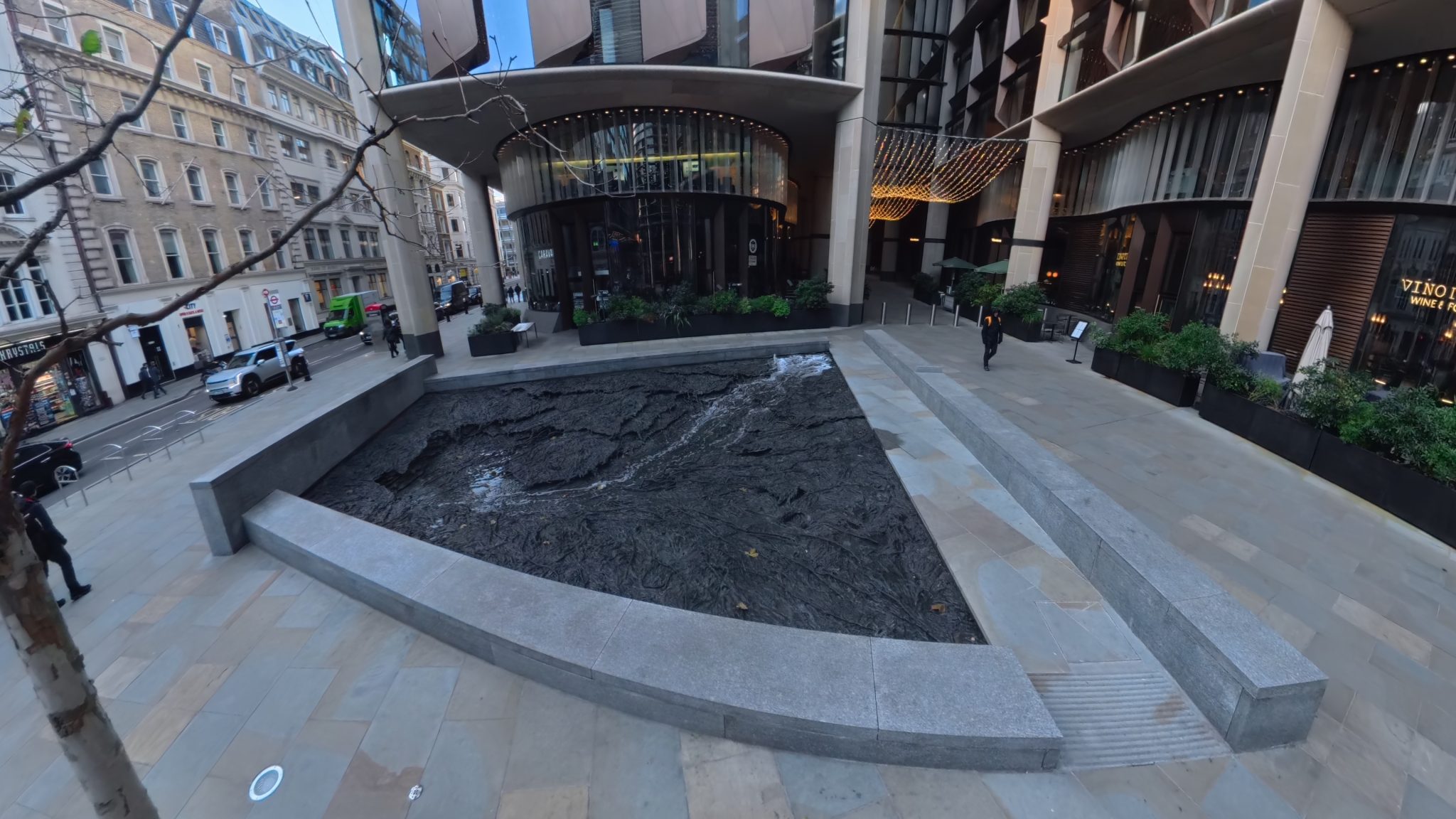
Forgotten Streams is a striking public artwork nestled outside Bloomberg Arcade, created by renowned artist Cristina Iglesias to evoke the memory of the ancient Walbrook river that once flowed through this heart of London. This site blends art, history, and landscape, inviting visitors to reconnect with the buried waterways that shaped the city’s foundations. Its pools and sculpted riverbeds offer a glimpse into London’s distant past, where nature and urban life intertwined centuries ago.
Forgotten Streams is located at either end of Bloomberg Arcade, steps away from Bank Underground station and within walking distance of the historic St Stephen Walbrook church. Look for the distinctive pools set into the pavement outside the Bloomberg European headquarters.
-
Reimagining the WalbrookForgotten Streams is inspired by the lost Walbrook river, a vital waterway for Roman Londinium and medieval London, now hidden beneath the city’s modern streets.
-
Bronze Riverbed SculptureArtist Cristina Iglesias designed the feature with moulded bronze sheets, depicting a riverbed full of roots, mud, and leaves, creating a powerful visual and tactile connection to London’s natural heritage
-
Three Distinct PoolsThe artwork consists of three pools across Bloomberg Place, echoing the river's journey and allowing visitors to imagine a tidal stream meandering beneath their feet
-
Varied Water ModesForgotten Streams offers different water effects: stream mode, tributary mode, and flood mode, each programmed to simulate the ebb and flow of a living watercourse.
-
Sustainability and InnovationThe installation features rainwater capture and an advanced system for recycling and filtering water, reflecting modern commitments to sustainability while honouring London's hydrological legacy
-
What’s in a Name?The name “Walbrook” is commonly traced to the Old English term Weala Broc, meaning “brook of the foreigners” or “brook of the Welsh”—a reference to the native Britons living alongside Saxon settlers in early London. This name is understood to date from around the seventh to eleventh centuries CE, a time when Anglo-Saxon and Brittonic communities coexisted and the word "Welsh" was widely used by Saxons to describe the native population. This etymology offers insight into the city’s linguistic and cultural divisions during the Anglo-Saxon era.
-
A Lost Holy Well in ShoreditchThe Walbrook’s origin is commonly traced to Shoreditch, where a holy well once fed this vital stream. The well’s presence gave rise to Holywell Priory—an important medieval landmark whose grounds stretched over what is now Bateman’s Row, Curtain Road, Holywell Lane, and Shoreditch High Street. Though the exact location of the well has long since disappeared from maps, explorers today might find themselves at New Inn Yard—the cloister’s lost spring still echoing in the area’s historic names
London Mithraeum
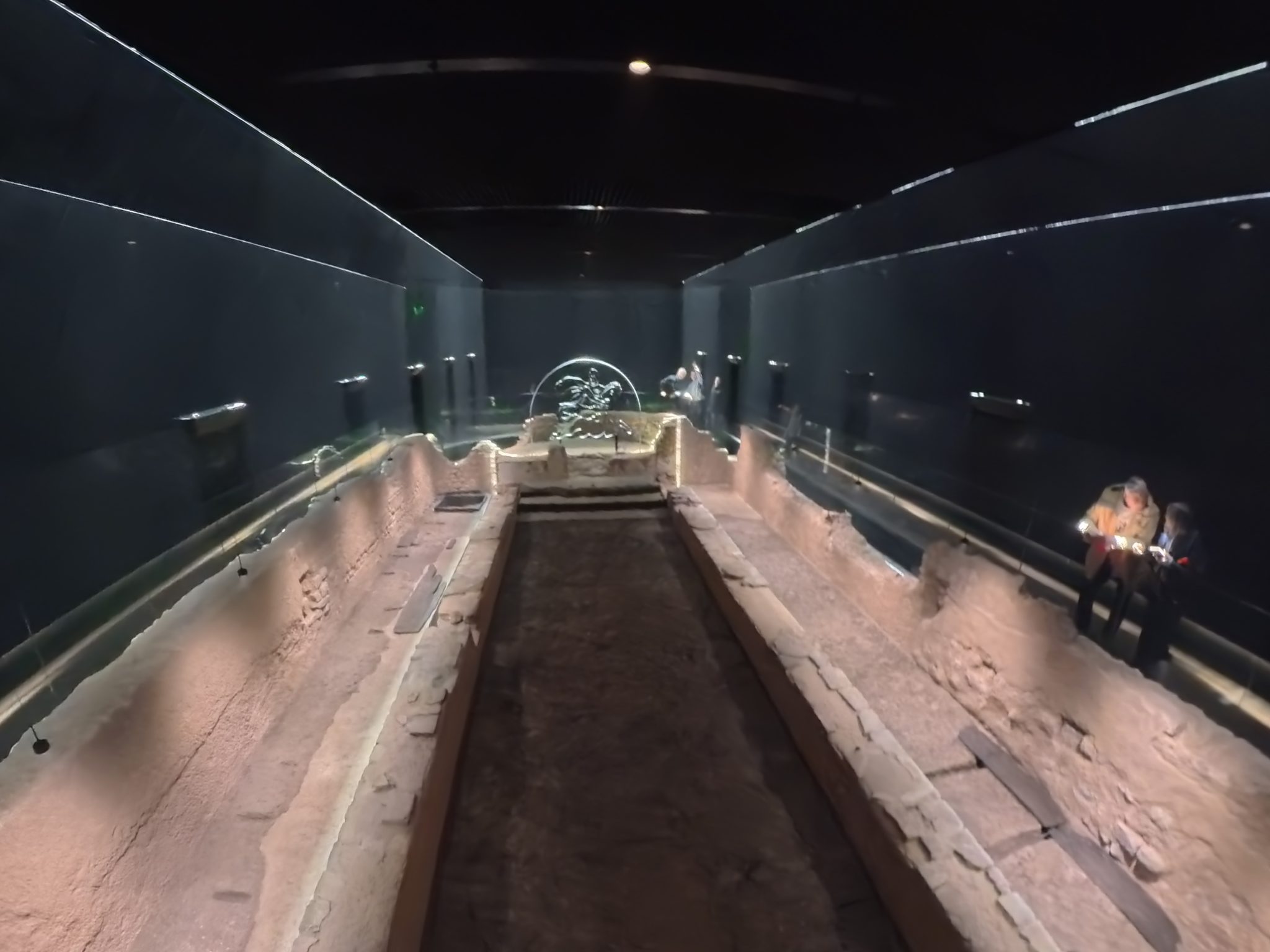
(In the Bloomberg Building) A reconstructed 3rd-century Roman temple to the god Mithras, discovered in 1954. Features immersive displays of artifacts and rituals tied to Londinium’s mercantile past.
London’s Mithraeum, rediscovered in 1954, is fascinating for its underground, cave-like design reflecting the cult’s origins, its builder (likely veteran Ulpius Silvanus), its use by an all-male mystery cult popular with soldiers and merchants, and its surprising architectural link to early Christian churches, all located beneath Bloomberg’s HQ over a lost Roman river, the Walbrook
Next door to the Bank station on Walbrook - easy to walk past it!
-
Lost River SettingThe temple was built on reclaimed land next to the Walbrook, a lost river in Roman London, giving it a damp, underground feel that mirrored Mithras's myth.
-
Secretive All-Male CultIt was a temple for a mystery religion, popular with soldiers, merchants, and civil servants, where men underwent secret initiation rituals.
-
Builder's VowAn inscription suggests an army veteran, Ulpius Silvanus, built it to fulfill a vow, making him a potential builder.
-
Discovery & Public FrenzyFound during WWII reconstruction, its 1954 unveiling drew 400,000 visitors in two weeks, a huge sensation for the time.
-
Architectural Link to ChristianityIts nave-and-aisle design leading to an apse is a precursor to the traditional Christian church layout, notes Britain Express.
- « Previous
- 1
- …
- 5
- 6
- 7