Skip to content

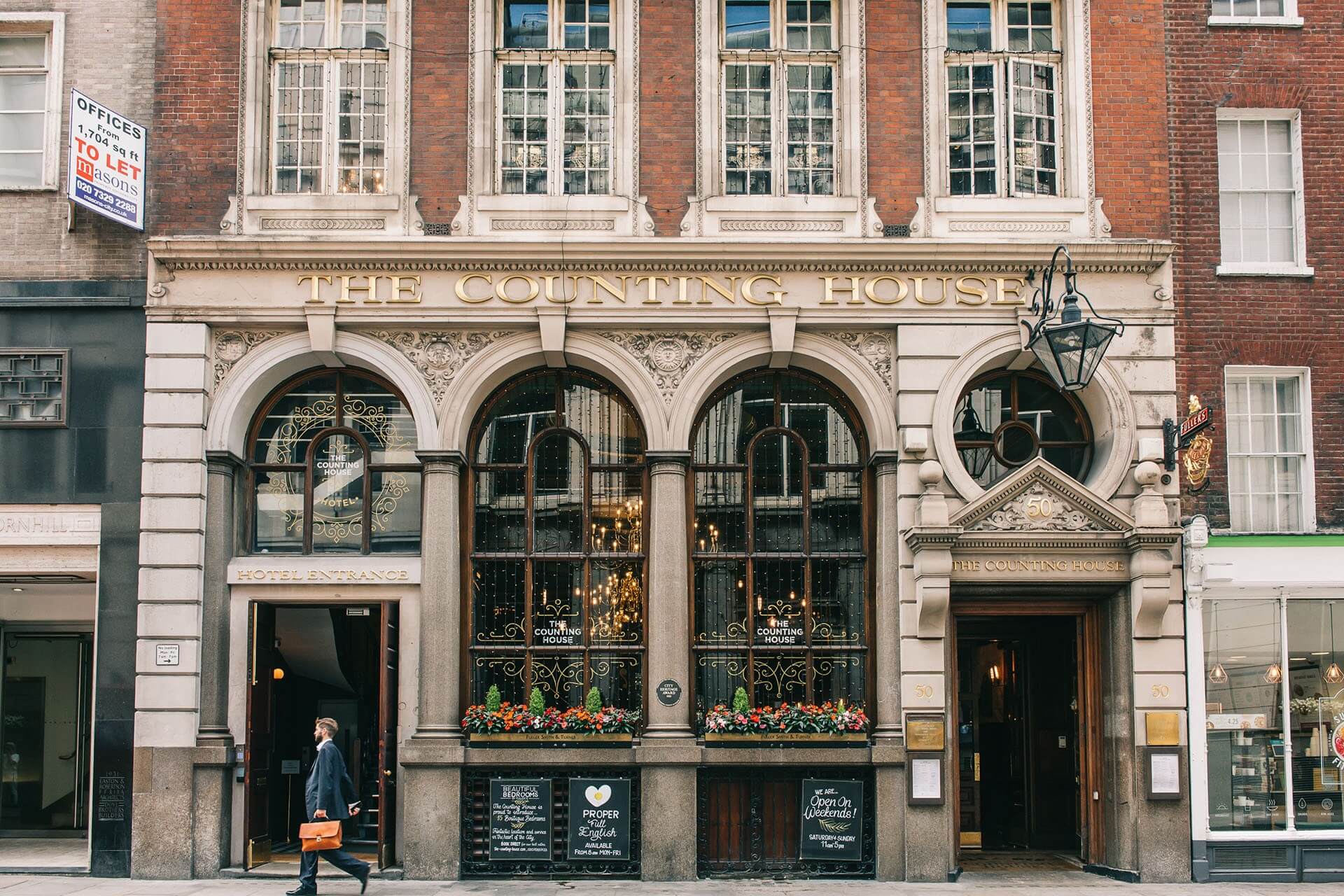
The Counting House

Dining & Drinks
  • Signature Dishes: The pub is famous for its award-winning handmade British pies. The menu also includes pub classics like beer-battered fish and chips.
  • Beverages: As a Fuller’s Ale & Pie House, it offers a wide range of cask-conditioned ales, including London Pride, alongside craft beers and fine wines. 
Hotel & Events
  • Accommodation: The hotel features 21 boutique bedrooms (opened in 2019) located in the former City University Club. In a nod to its financial history, rooms are named after British coins such as Sovereign, Guinea, and Florin.
  • Venues: The former bank manager’s offices have been converted into private function rooms for meetings and weddings
Address: The Counting House, EC3, 50 Cornhill, London, EC3V 3PD
Interesting Facts:
  • Site Heritage
    The building stands on the site of a 2,000-year-old Roman basilica, and elements of the ancient foundations are still preserved in the sub-basement.
  • Banking Roots
    Built in 1893 as Prescott’s Bank, the interior retains its original grandeur, featuring a massive oval servery, a high stained-glass dome, chandeliers, and Spanish mahogany details.
  • Dickens Connection
    While the current building dates to the late 19th century, Charles Dickens’ A Christmas Carol places Ebenezer Scrooge’s fictional counting house in this same area of Cornhill

Pret A Manger on 90 Queen

Address: Pret A Manger, 90 Queen St, London EC4N 1SA

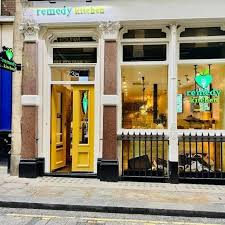
Remedy Kitchen on Watling St

Healthy Bowls : providing fresh, healthy, and flavourful meals that are quick like fast food but nutritious.

Address: 73A Watling St, London EC4M 9BJ

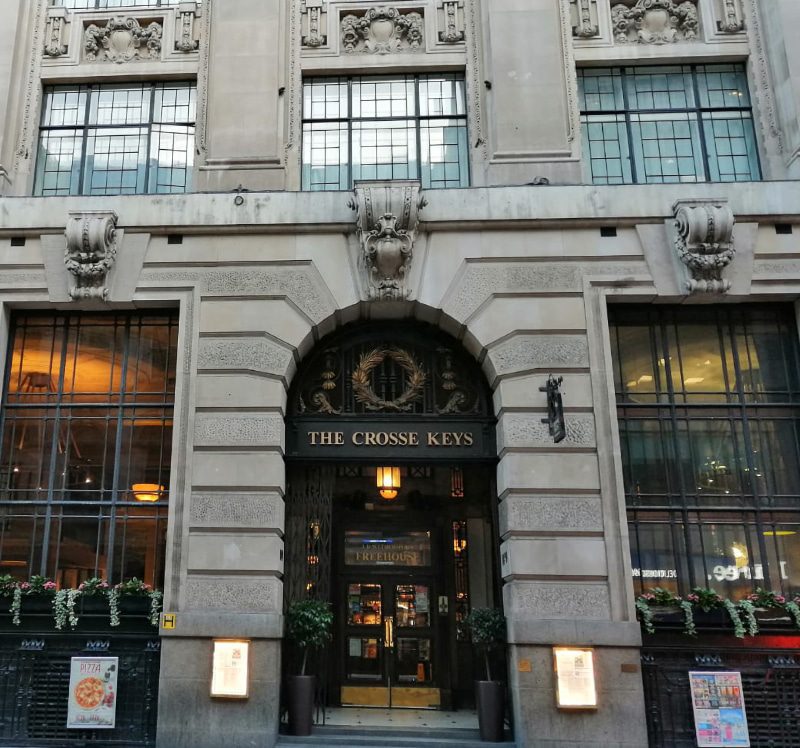
The Crosse Keys Weatherspoons

The Crosse Keys is a vast former banking hall turned pub, set in the old London headquarters of the Hongkong and Shanghai Banking Corporation at 9 Gracechurch Street, opened in 1913 and designed by W. Campbell Jones. The pub takes its name from an earlier inn, The Crosse Keys, which stood nearby from the 16th century, serving as both a major coaching inn and an early theatre where companies like Shakespeare’s Chamberlain’s Men performed before purpose‑built playhouses existed.

Located by the entrance to Leadenhall Market on the site of the Roman forum, the pub is surrounded by layers of City history – from medieval markets and Dick Whittington’s lead‑roofed mansion to the rise of coffee‑house “penny universities” that evolved into modern finance and institutions like the Royal Exchange, Lloyd’s and the Stock Exchange. Inside, Wetherspoon’s displays frame this story: the growth of London’s markets and livery companies, the careers of figures such as Daniel Defoe and Sir Thomas Gresham, and the global story of the Hong Kong and Shanghai Bank, whose need for a grand London presence created the impressive space visitors enjoy today.

Address: 9 Gracechurch St, London EC3V 0DR
Interesting Facts:
  • Hong Kong & Shanghai Banking Corporation
    The Crosse Keys pub occupies the former London headquarters of the Hong Kong & Shanghai Banking Corporation, a grand banking hall opened in 1913 and designed by W. Campbell Jones.
  • Shakespeare’s company performed plays in the courtyard
    Shakespeare’s company, the Chamberlain’s Men, performed plays in the courtyard of the original Crosse Keys inn before dedicated theatres like the Globe were built.
  • Links to ancient history
    Entrance to Leadenhall Market opposite the pub sits on the site of Roman London’s forum and basilica, later evolving into a medieval market for poultry, cloth, leather and meat.
  • Keys of Heaven
    The Crosse Keys name comes from the “Keys of Heaven” held by St Peter, reflected in the old inn’s sign and now in the modern pub’s identity.
  • Associated with a famous clowns
    Richard Tarlton, one of Elizabethan England’s most famous clowns, was closely associated with the Crosse Keys and nearby taverns, performing in their inn‑yard theatres
  • Largest space linked to old Banking
    The current building was created to house “one of the largest spaces on one floor devoted to banking in the City of London,” a scale that explains the pub’s impressive, cathedral‑like interior today.

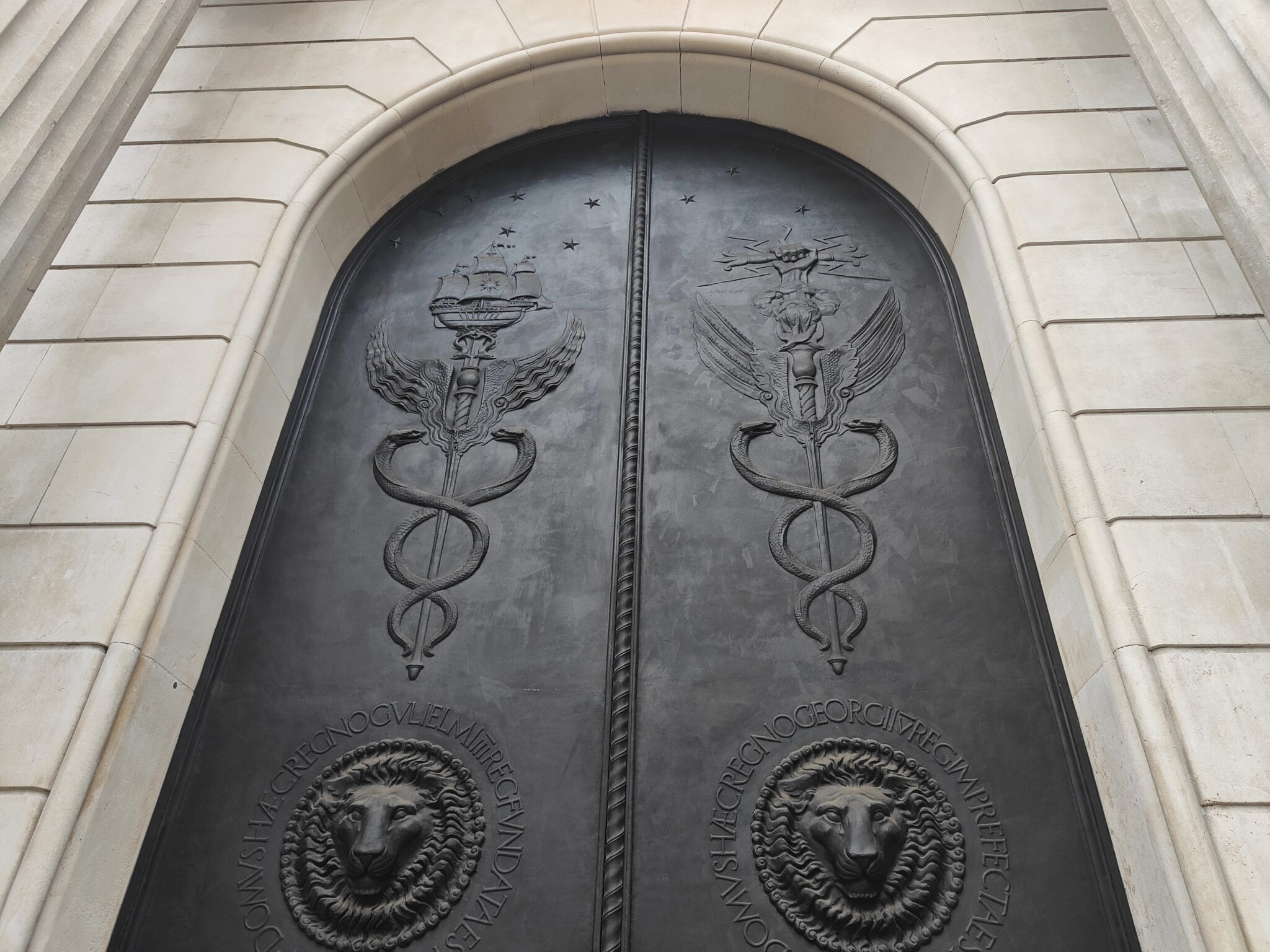
Bank of England – Front doors

On the left panel, a caduceus — the winged staff of Mercury — rises beneath a sailing ship from the age of the Bank’s founding. Together they speak of commerce and communication, the swift exchange of goods and wealth that powered Britain’s emergence as a maritime trading empire. The wand of Mercury, god of trade and messengers, evokes financial ingenuity and movement — the lifeblood of a global economy.

On the right, the hand of Zeus grasps a bolt of lightning, expressing command over unseen energy: once natural, now symbolic of modern electrical and financial force. It represents the Bank’s mastery of new powers — not just of gold or paper, but of technology, influence, and trust.

Above, two constellations mirror the heavens of the northern and southern hemispheres: Ursa Major and the Southern Cross. These celestial emblems remind us that the Bank’s reach extends across the world — underwriting empires, trade routes, and the global flow of money itself.

Guarding these elements stand the lions — eternal symbols of strength and vigilance, protecting the realm’s wealth within. Together, these figures form a story in stone and bronze: the mythic spirit of commerce, transformed into the enduring authority of the modern financial age.


Address: Bank of England on Threadnedle Street ((EC2R 8AH)
How to Find:

Main entrance to the Bank of England on Threadnedle Street ((EC2R 8AH)

12 Lamp Posts of the Great Livery Companies

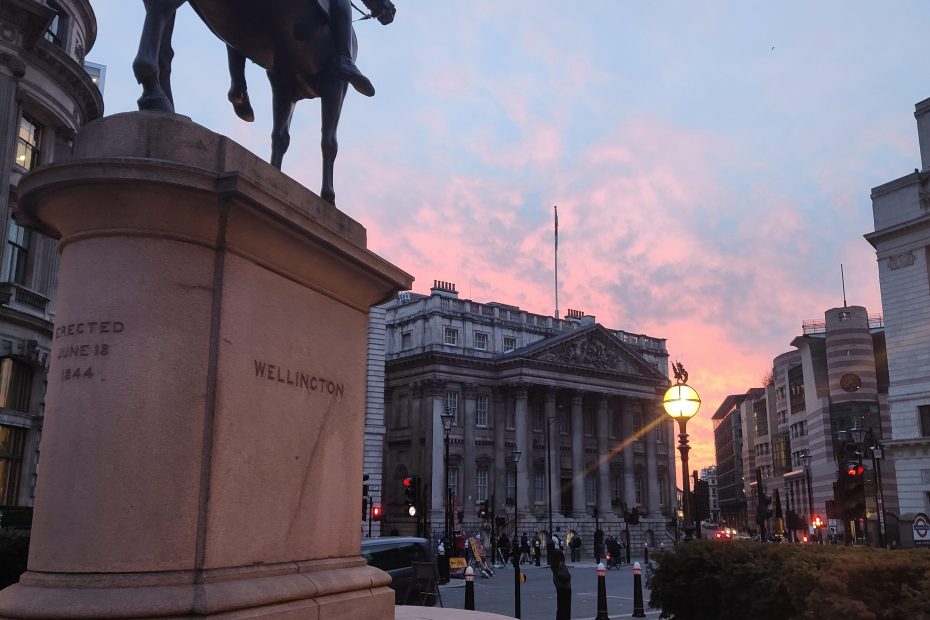
The 12 Lamp Posts of the Great Livery Companies stand around the raised forecourt in front of the Royal Exchange, above Bank Underground station, at the busy junction of Threadneedle Street, Cornhill, Poultry and several other key City streets.

Each ornate cast‑iron post sits on a stone plinth, carries a glass globe lamp and is topped by a dragon holding the City of London shield, while a coloured heraldic shield at the base shows which “Great Twelve” Livery Company it represents.

The four posts nearest the Royal Exchange have triple globes rather than single ones, marking out the four highest‑ranking companies: Mercers, Grocers, Drapers and Fishmongers. These lampposts were presented to the City in 1985 by the Great Twelve and quietly celebrate the medieval trade‑guild system that evolved into today’s powerful Livery Companies.

Address: London EC3V 3LL
How to Find:

The lampposts are specifically located in the raised forecourt area directly above Bank underground station, at the meeting point of several major streets, including Cornhill, Threadneedle Street, and Princes Street

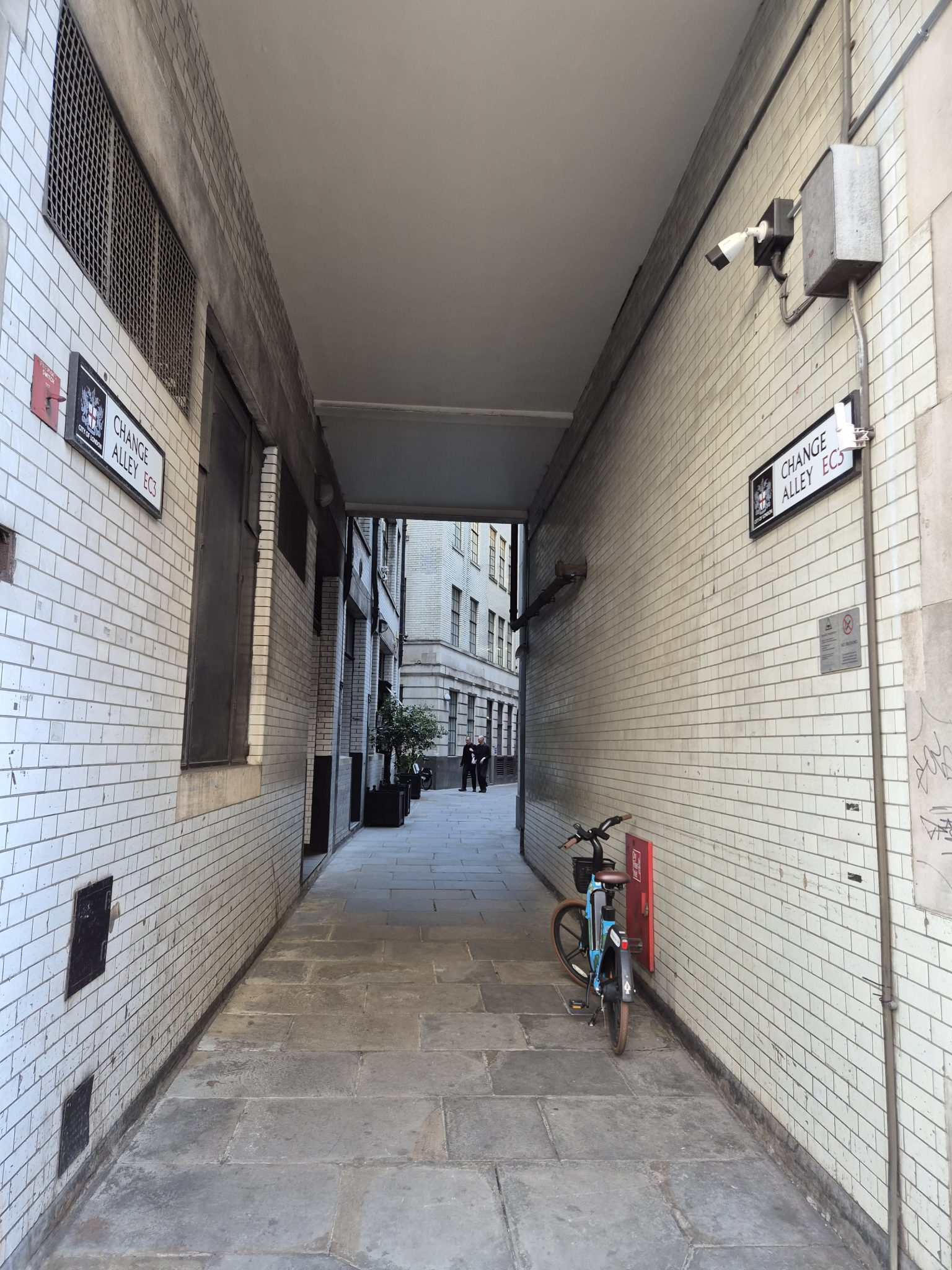
Pope’s Head Alley

Pope’s Head Alley is a historic, narrow passageway in the City of London, named after the famous Pope’s Head Tavern that stood at its northern end, serving as a hub for booksellers and known to Samuel Pepys, with remnants of its papal past visible in its name and historical markers, connecting Lombard Street to Cornhill near the Royal Exchange

Address: 4 Cornhill, London EC3V 3NR, UK
How to Find:

Pope's Head Alley is a historic lane in the City of London, connecting Cornhill (around No. 18) to Lombard Street (around No. 72)

Interesting Facts:
  • New Lloyd's
    Site of the "New Lloyd's" (1769), a precursor to the modern Lloyd's of London, and frequented by notable figures like John Stow

Bloomberg Building

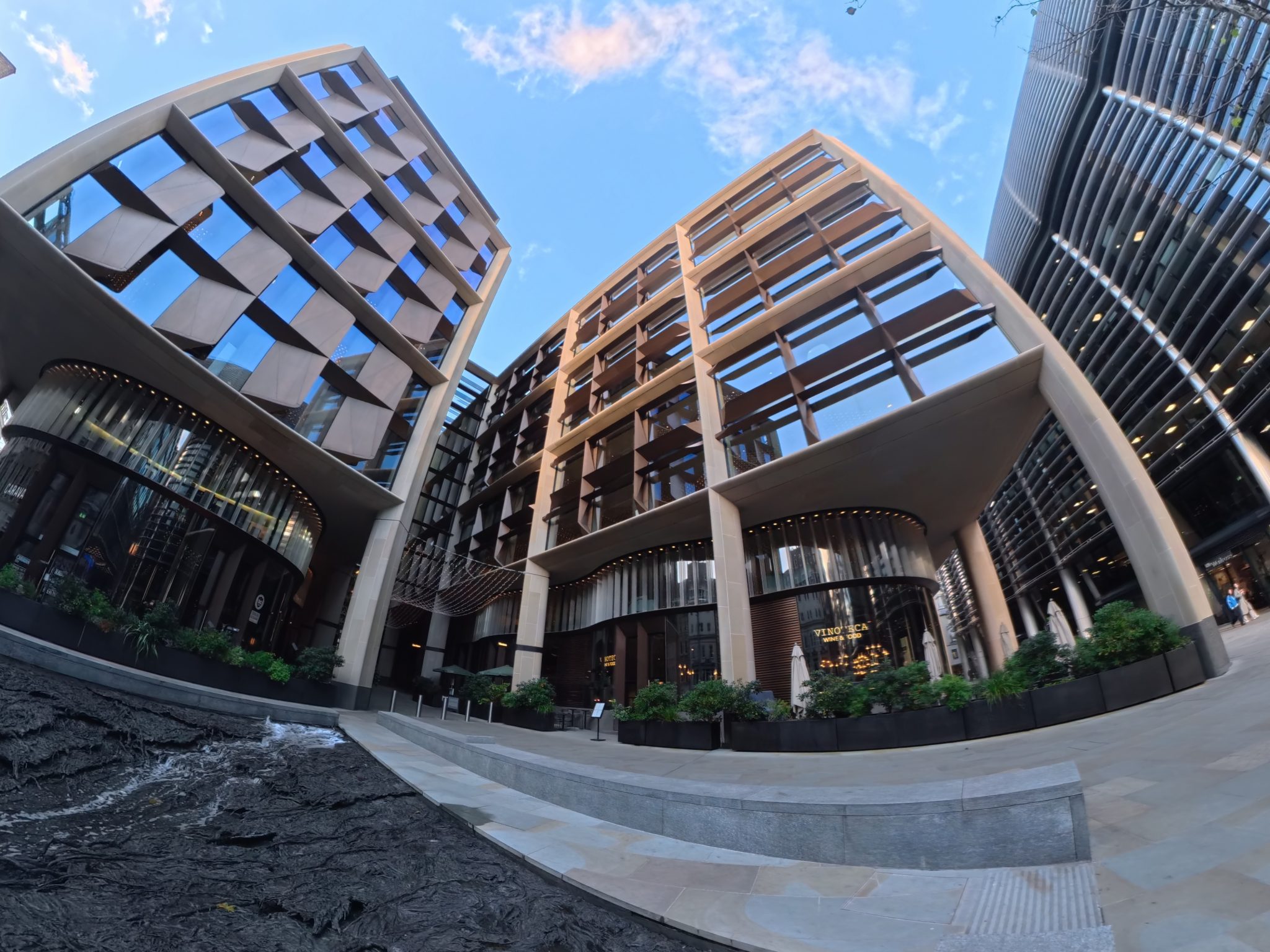
Bloomberg London is a major contemporary office complex and European HQ for Bloomberg, designed by Foster + Partners on a historic City of London site, featuring two linked sandstone‑and‑bronze buildings, a revived pedestrian arcade with restaurants, public plazas, and access to the restored Roman Temple of Mithras, and widely recognised for its innovative, highly sustainable design.

Address: 3 Queen Victoria St, London EC4N 4TQ
How to Find:

West of Walbrook

Interesting Facts:
  • Major Roman finds on site
    Archaeological excavations for the Bloomberg Building uncovered around 15,000 Roman artefacts, including over 400 wooden writing tablets preserved in the former Walbrook river mud. This collection includes the earliest known handwritten document in Britain, the first known reference to London by name, and what is considered the city’s earliest surviving financial document.
  • London Mithraeum Bloomberg SPACE
    The building integrates the London Mithraeum, a reconstructed Roman Temple of Mithras, seven metres below street level on roughly its original site beside the line of the Walbrook. This cultural hub is free to visit and displays the temple remains, a selection of Roman artefacts from the excavations, and rotating contemporary art commissions responding to the archaeology.
  • Record‑breaking sustainability rating
    Bloomberg London achieved a BREEAM “Outstanding” sustainability score of 98.5%, one of the highest ever awarded to a major office building. Environmental features include “breathing” facades that respond to weather, an occupancy‑responsive ventilation system, and integrated ceiling panels combining heating, cooling, lighting and acoustics with 500,000 LEDs that use about 40% less energy than typical office lighting
  • Extreme water conservation measures
    The complex captures rainwater, recycles cooling‑tower blow‑off and greywater, and uses vacuum‑flush toilets to achieve net zero use of mains water for flushing. In total, the system saves around 25 million litres of water per year, roughly equivalent to ten Olympic‑size swimming pools
  • Scale and urban footprint
    The development provides about 1.1 million square feet of office and retail space on a single, previously underused city block, bringing some 4,000 Bloomberg employees together under one roof. At street level it creates three new public plazas and restores a pedestrian route roughly along the Roman Watling Street alignment between Queen Victoria Street and Cannon Street
  • Award‑winning architecture
    Designed by Foster + Partners and completed in 2017, the pair of bronze‑finned, Derbyshire sandstone‑clad buildings linked by glazed bridges won the 2018 RIBA Stirling Prize for the UK’s best new building. Judges highlighted its combination of advanced workplace design, sensitive treatment of an important archaeological site, and exemplary environmental performance

St Mary Aldermary

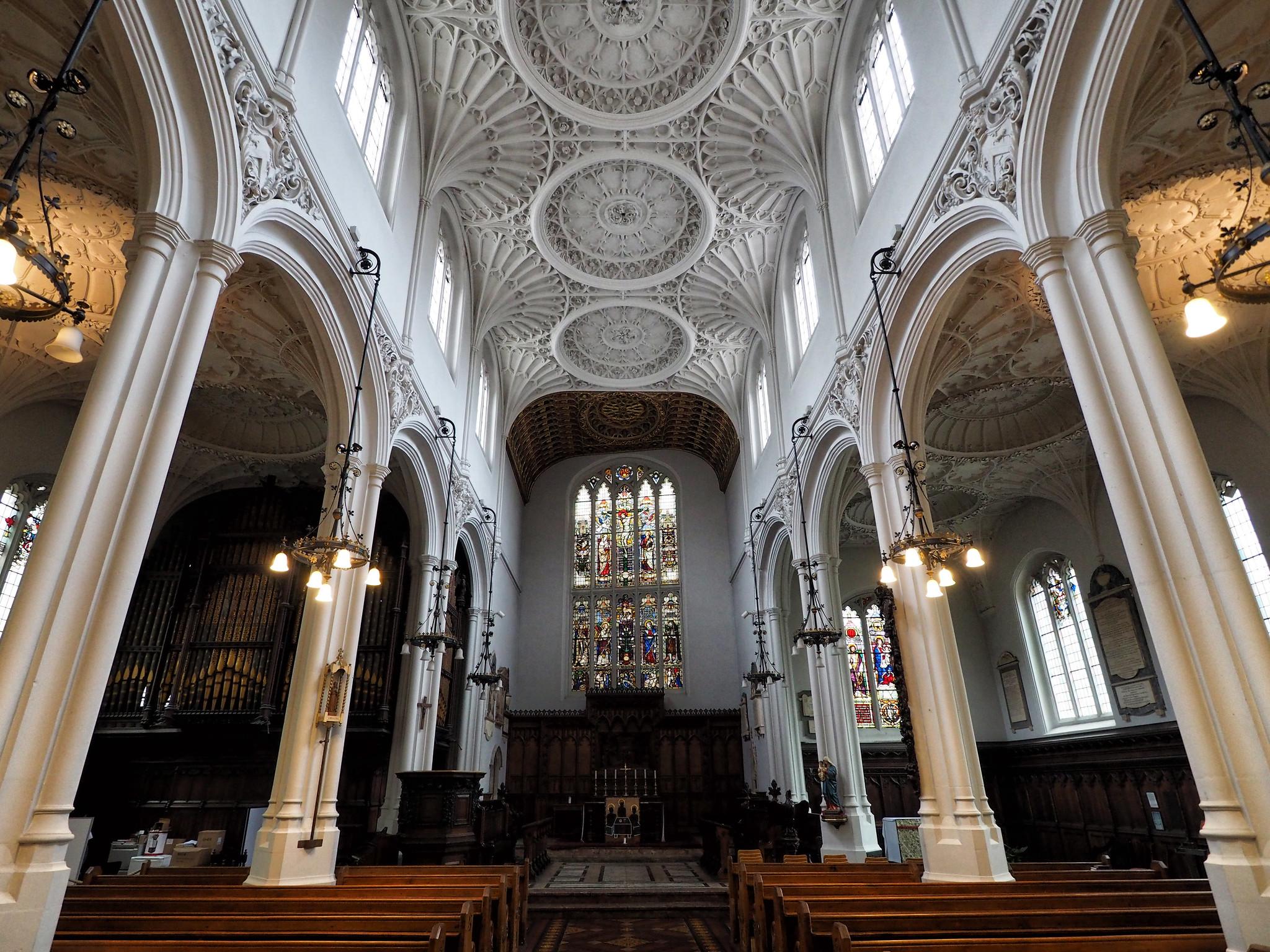
St Mary Aldermary is a late medieval parish church in the heart of the City of London, standing on Bow Lane where it meets historic Watling Street. Now an Anglican church, it serves as both a place of worship and a quiet refuge amid the financial district, its present structure reflecting a long history of rebuilding and adaptation. Of medieval origin, the church was substantially rebuilt from 1510 and only completed in 1632, before being badly damaged in the Great Fire of 1666 and then reconstructed under the direction of Christopher Wren’s office in a rare late Gothic style.

St Mary Aldermary is thought to be the oldest church in the City of London dedicated to the Virgin Mary, with documentary references dating back to around 1080. The current building, completed after Wren’s post-fire reconstruction, is famous for its soaring plaster fan-vaulted ceiling and its status as one of the most important late 17th‑century Gothic churches in England. Today it functions as a Guild Church and community hub, combining historic fabric with an active contemporary ministry and café in the nave

Address: St Mary Aldermary, Bow Ln, London EC4M 9BW
How to Find:

Located on Bow Lane at the junction with Watling Street

Interesting Facts:
  • Older St Mary
    The “Aldermary” name likely means “older St Mary,” distinguishing it from newer Marian churches in the City and hinting at its particularly ancient origins
  • Wren
    Wren’s team rebuilt it in Gothic rather than classical style, apparently because a benefactor’s legacy required the new church to imitate the pre‑fire building, making it the only Wren church in the City fully executed in late Gothic
  • Unique plastering
    The spectacular plaster fan vaulting in the nave and aisles contains coats of arms, including that of Henry Rogers, the wealthy merchant whose bequest funded much of the rebuilding.
  • Ceremonial sword
    Inside is a rare 17th‑century wooden sword rest (used to hold the ceremonial sword of the Lord Mayor), dating from around 1682 and considered an unusual survival.
  • Stained-glass
    The stained-glass scheme is largely post‑Second World War, including windows that depict both the Great Fire of London and the defence of London in 1939–45, blending the church’s religious story with episodes from the city’s civic history.