The Wolf: Myth, Symbol, and Memory Across Britain, Rome, and the Steppes
The wolf stands at the threshold between wildness and civilization, feared as a destroyer yet revered as a guide, ancestor, and warrior spirit. From post‑Ice Age Britain to Celtic and Norse myth, from Rome’s she‑wolf to the grey wolf of the Turkic steppes, this animal carries a web of meanings that tie together landscape, memory, and myth.
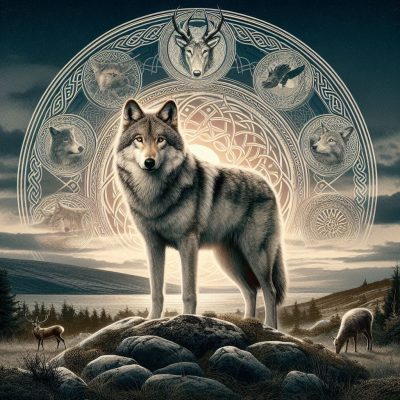
Wolves in Ancient Britain
Wolves arrived in Britain at the end of the last Ice Age, around 10,000–12,000 years ago, crossing the land bridge from continental Europe and establishing themselves as apex predators in the emerging forests. For thousands of years they formed a widespread and stable population, shaping ecosystems and coexisting with human hunter‑gatherers.
As human societies shifted from hunting to herding, wolves became both competitors and symbols. To nomadic and hunting communities, wolves embodied strength, endurance, and guidance, mirroring human skills in tracking, cooperation, and survival; to agrarian communities guarding livestock, they became sinister emblems of loss and threat. In Christian Europe, this negative image hardened: the Bible references wolves repeatedly as metaphors for greed, false prophets, and destructive forces, reinforcing the idea of the wolf as a moral and spiritual danger.
Celtic Wolves, Cernunnos, and Warrior Spirit
In the wider Celtic world, the wolf more often symbolised the perfect warrior and the raw, instinctive forces of nature. Archaeological and iconographic studies suggest that, rather than simple “monsters,” wolves appear as guides, teachers, and liminal companions—figures that accompany the young warrior through rites of passage into adulthood and battle.
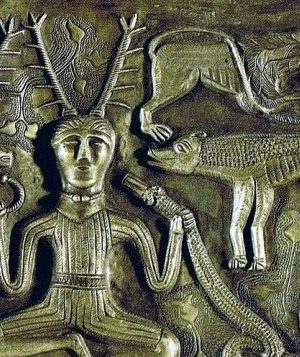
The antlered god Cernunnos, often shown surrounded by wild animals and associated with forests, fertility, and the underworld, fits naturally into this lupine symbolic landscape. Though not always depicted with wolves, Cernunnos represents a lord of wild things and thresholds, a mediator between human society and the animal, chthonic realm where creatures like the wolf move freely. In this context, wolves are not mere threats but allies and emblems of the warrior’s integration with nature’s power.
 Celtic coinage strengthens this connection. On some late Iron Age “Celtic” coins we see wolf‑like creatures with open jaws, often in close association with solar and lunar symbols, suggesting narratives of cosmic pursuit and protection similar to those found in Norse myth. These designs may encode myths of astral wolves and warrior‑gods, blending local belief with broader Indo‑European themes of beasts chasing or guarding the heavenly lights..
Norse Wolves: Sköll, Hati, and Fenrir at Ragnarök
Further north, wolves prowl the very architecture of time and cosmos. In Norse mythology, two giant wolves, Sköll (“one who mocks”) and Hati (“he who hates”), chase the sun and the moon—personified as Sól and Máni—across the sky, their endless pursuit explaining the daily journey of the heavenly lights. These wolves are described as offspring or brood of the monstrous wolf Fenrir, himself a child of Loki and the giantess Angrboða.
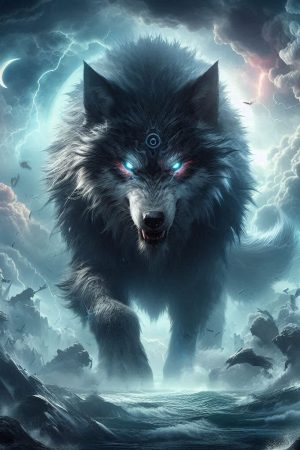
At Ragnarök, the doom of the gods, this chase reaches its climax: Sköll and Hati finally overtake and devour the sun and moon, plunging the cosmos into darkness and heralding the collapse of the world. Fenrir himself breaks free from his bonds, swells to an immense size, and kills Odin—only to be slain in turn by Odin’s son Víðarr, a cycle of destruction and vengeance that clears the way for a renewed world. These stories of astral wolves consuming light resonate strikingly with the imagery on some Celtic coins, where a wolf with open jaws appears alongside sun and moon symbols, hinting at shared or converging mythic motifs across Celtic and Germanic cultures.
Rome’s She‑Wolf and Trojan Roots
In Rome, the wolf becomes civilization’s foster‑mother. The city’s founding myth tells of the twins Romulus and Remus, abandoned by the Tiber and rescued and suckled by a she‑wolf—the famous Lupa Capitolina—until they were found by a shepherd, with Romulus later founding the city. Here the wolf is both wild and nurturing, a guardian who turns doomed infants into founders of empire.
Roman tradition further traces its ancestry to Aeneas, a refugee from the fallen city of Troy in what is now western Turkey. This Trojan link symbolically connects Roman identity back to Anatolia, creating an east‑to‑west arc that mirrors steppe and Turkic stories of migration and survival under divine guidance.
Turkic Sky‑Wolves and the Steppe
Among Turkic peoples of Central Asia, the grey wolf (Bozkurt) is both ancestor and divine guide. Origin myths tell of a she‑wolf leading survivors of disaster or oppression to new homelands, often under the protection of the sky god Tengri, turning the wolf into a living embodiment of heaven’s will. In these stories, the wolf represents resilience, unity, and the capacity to endure hardship through courage and migration.
Shamans (kam or bakshi) operated as healers and mediators between human and spirit worlds, using drums, animal‑motif costumes, and trance states, and the wolf frequently appeared as a spirit helper or totem in this shamanic setting. In modern Turkey, the wolf continues to surface in folk art, political symbolism, and early republican iconography, including its appearance on Turkish lira designs in the 1920s, showing how ancient steppe myths still echo in a modern nation‑state.
From Wuffa to Heraldry: Wolves in Early English Identity
In early medieval East Anglia, the wolf was not just an animal but a dynastic badge. The East Anglian royal line traced itself back to a figure named Wuffa—“little wolf”—whose descendants, the Wuffingas, were remembered as “wolf people,” linking rulership to lupine strength, kin‑loyalty, and predatory prowess. Later tradition associates the region’s royal and saintly narratives with wolves, including legends in which a wolf protects the severed head of St Edmund.
Heraldry across medieval Europe regularly used the wolf as a charge. Despite its reputation as a livestock killer, heraldic writers classed the wolf with noble beasts like the lion, eagle, and horse, praising it as courageous, industrious, and persevering, with wolf heads and full wolves appearing on the arms of numerous families. In Britain and on the Continent, wolves in heraldry often symbolised endurance in siege, ferocity in war, and unwavering loyalty to kin and lord.
Extermination: From Forest Lords to Ghosts
From around 1000 A.D., Britain’s wolf population began a steep decline linked to deforestation, expanding agriculture, and organised hunting for bounties. Royal records describe wolf hunting as a form of tribute: in some cases, land or favour could be granted on the condition that tenants rid an area of wolves, turning the animal into a political as well as ecological target.
Norman and later Plantagenet kings employed official wolf‑hunters, and in 1281 Edward I issued orders for the systematic extermination of wolves in England. Woodland, including areas around Morecambe Bay, was coppiced or even burned to deny wolves cover, and over the following centuries references to living wolves in English records rapidly diminished. Wolves likely vanished from England and Wales by the late Middle Ages, and tradition holds that the last wolf in Scotland was killed near Killiecrankie in 1680 by Sir Ewen Cameron—a symbolic vanishing of Britain’s last great native predator in the same century that saw a Scottish dynasty deposed from the English throne.
Wolf Roads, Big Bad Wolves, and the Wolf Moon
Beyond Europe and Central Asia, wolf symbolism retains this ambivalent mix of reverence and dread. The Pawnee of North America, sometimes called “wolf people,” refer to the Milky Way as the “Wolf Road,” imagining the star‑river as a celestial path trod by wolves and spirits. In contrast, European folktales like “Little Red Riding Hood” and “The Three Little Pigs” recast the wolf as the “big bad” predator, a cautionary figure warning children about trust, desire, and straying from the safe path.

Astronomical folklore preserves another lupine echo: the “Wolf Moon,” the traditional name for the first full moon of the year, usually in January, was said to mark the time when hungry wolves howled more often near human settlements in midwinter scarcity. Even long after wolves disappeared from Britain’s countryside, their remembered voices continued to shape how people named and imagined the winter sky.
Call to Remember the Wolf
The wolf can still be invoked as an inner ally in the same way it is used today in heraldry, a memory of how humans once lived closer to risk, instinct, and the wild edge of the world. In that sense, “adopting” the wolf now means choosing to remember and protect both the animal itself where it still survives, and the spirit it represents within us.
In an age that prizes safety, comfort, and control, the wolf reminds us that life is also about courage, uncertainty, and endurance against the odds. To keep the wolf alive is to keep a place in our hearts and culture for instinct, resilience, and the capacity to face darkness without surrendering our humanity. Whether as Cernunnos’ wild companion, Rome’s foster‑mother, the Turkic sky‑wolf, the Norse devourer of sun and moon, or the lost predator of Britain’s forests, the wolf challenges us to remember that thriving, not just surviving, requires a touch of the wild.