The Story of English Common Law: A Unique Legal Legacy
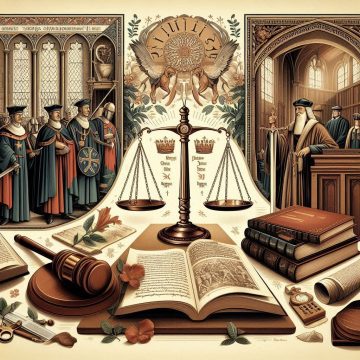
English common law stands as one of the most remarkable and influential legal systems in human history. Unlike most European nations, which predominantly follow Roman law traditions codified in comprehensive statutes, England developed a law deeply rooted in judicial precedent, evolving customs, and a dynamic balance of morality and reason. This legal system—often described as “judge-made law”—has proven adaptable and resilient, shaping the legal frameworks of many modern states across the globe, particularly those in the Commonwealth and the United States.britannica+3
Building Blocks: Natural Law, Divine Law, and Roman Law
The roots of common law cannot be properly understood without reference to the profound philosophical and theological foundations shaping Western legal thought. Thomas Aquinas delineated a hierarchy of laws:
-
Eternal Law (God’s all-encompassing wisdom),
-
Divine Law (special revelation as one finds in the Bible),
-
Natural Law (universal moral principles discoverable by human reason), and
-
Human Law (laws created by societies and governments).alevelphilosophyandreligion+1
Early English judges and jurists, such as Henry de Bracton and Sir Edward Coke, routinely invoked biblical scripture alongside natural law reasoning to justify legal principles, insisting that even kings were subject to divine and eternal laws. These moral and religious codes guided the evolution of English law, marrying faith and reason in governance.classic.austlii+2
In contrast, the Roman law tradition, prevalent on the European continent, boasts systematic codification and statutes drawn from imperial decrees and legal scholars. Roman law influenced civil law systems through comprehensive legal codes like Justinian’s Corpus Juris Civilis, where judges apply laws instead of making them. English common law’s reliance on precedent and judge-made decisions stands in contrast to this civil law tradition.law.berkeley+2
The Anglo-Saxon Legal Foundation: Restitution, Community, and Common Customs
Before the Norman Conquest, England consisted of varied local systems grounded in communal customs and obligations. Anglo-Saxon law heavily emphasised restitution and compensation, prominently expressed through the wergeld system, where monetary fines corresponded to the victim’s social status and the offender’s wrongdoing. This not only redressed wrongs but avoided blood feuds.ssc.wisc+1
Justice was community-based, with local courts organized around units such as tithings and hundreds—small groups responsible for mutual accountability. This decentralized justice laid foundations for a legal culture attentive to “common customs,” a concept that would underpin the later emergence of a unified common law.wikipedia+1
The Norman Conquest and the Birth of Common Law
When William the Conqueror seized England in 1066, he promised to maintain the “laws of King Edward the Confessor,” but his reign fundamentally reorganized the legal system. The establishment of royal courts (Curia Regis) and itinerant judges travelled across counties to apply a national law uniting regional practices.
By the reign of Henry II (1154–1189), the system matured—royal judges enforced laws “common” to all England. The procedural writ system expanded dramatically, enabling claims to be brought before the king’s courts if tied to a recognized writ. The famous Assizes of Clarendon institutionalized the use of juries and intensive royal justice, gradually supplanting local customs with this evolving common law.bbc+3
This period marks the consolidation of law into a body of precedents decided by courts, rather than scattered customs or royal edicts. It spread gradually beyond England to Wales, Ireland, and later British colonies, having profound global influence.wikipedia+2
Morality, Biblical Influence, and the Rule of Law
Henry de Bracton eloquently expressed medieval England’s legal ideal: “The king is under God and under the law.” His treatise blended Roman, canon, and English law with Christian morality, insisting that even sovereign rulers be bound by higher justice. Sir Edward Coke built on this tradition, famously declaring that the law was “found, not made,” discovered through judicial wisdom, not whims of kings or parliaments.britannica+1
Biblical law and Christian ethics permeated many maxims of English law, such as the duty of fairness and the prohibition of partiality (“nemo judex in causa sua”), often invoked by judges in formulating equitable and common law principles. This spiritual legacy helped fortify the rule of law as a constraint on arbitrary power.schoolofphilosophy+2
The Doctrine of Precedent and the Need for Equity
A central feature of common law is precedent—the practice of courts being bound by prior rulings to ensure consistency and fairness (“stare decisis”). This deliverance creates a living legal tradition but sometimes produces rigidity, as strict adherence to prior rules may fail to serve justice in new or unique cases.legal.thomsonreuters+2
For example, in early English law, if a desired remedy did not fit the available writs or common law technicalities, courts couldn’t grant relief—even in clearly just claims. Additionally, common law traditionally granted damages but could not compel unique actions (like ordering someone to transfer a piece of land), causing legal frustration.supremecourt+1
To address these harsh outcomes, equity law emerged. Administered by the Lord Chancellor, equity supplements common law by focusing on fairness and conscience, offering flexible remedies such as injunctions, trusts, and specific performance otherwise unavailable under common law rules. The merging of common law and equity in modern English courts allows a more holistic, just application of law.lawteacher+2
Statutes: Legislative Authority and Common Law Interaction
While common law developed judge-made rules, statute law—laws passed by Parliament—enjoyed supreme authority where enacted. Parliament exercises the power to modify or override common law principles. Examples include:
-
The Theft Act 1968, which replaced scattered and technical common law offenses (like larceny) with a single statutory definition of theft.lawdit+1
-
The Married Women’s Property Act 1882, which abolished restrictive common law doctrines, giving married women independent control over property.lawdit
Where no statute governs a matter, courts apply common law precedent, preserving its importance as a gap-filler and evolving body of law.britannica+1
The Primacy of Natural Law Over Positive Laws
Natural law is often regarded as a higher law than statute law because it embodies universal moral principles accessible via human reason or divine revelation. Proponents assert that:iep.utm+2
-
Laws contrary to natural law are “wicked and unjust” and do not possess true legal validity.jstor+1
-
This means human or statutory laws must align with natural law principles to be considered legitimate.iep.utm
-
Practically, English courts enforce statutes regardless but recognize the philosophical underpinning that laws should conform to justice, preventing tyrannical or arbitrary legislation.philarchive+2
Thus, natural law functions as a moral compass guiding the evolution of positive law, including common law and statutes.
Modern Legacy
English common law today remains an adaptable, judge-made tradition enriched by centuries of synthesis between reason, morality, and practical governance. Its spread worldwide speaks to its enduring strengths: balancing stability with flexibility, honoring historical wisdom with contemporary justice.lloydlawcollege+2