Banks the Financial Time Machines
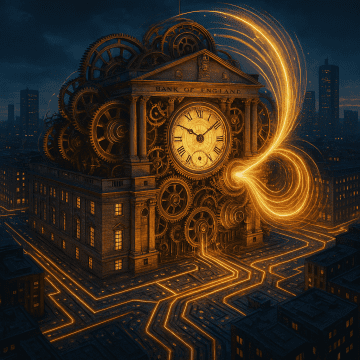 When people hear the phrase “time machine”, they usually think of science fiction: chrome capsules, blinking lights, a jump from one century to another. But we already live inside a very real kind of time machine, and most of us never see it. It doesn’t look like a device; it looks like a ledger.
Central banks are institutions that turn expectations about the future into spendable money today – creating credit against tomorrow’s taxes, production and labour, and releasing it into the present as loans, bonds and reserves. In that sense, they quietly organise how societies move through time: who can pull the future forward, who must wait, and who ends up paying later.
To understand how this “financial time travel” became possible, we have to go back long before central banks existed – to the first clay tablets of Sumer and the priest‑astronomers who turned the sky into a clock. From ancient debts and sky‑calendars to modern central banks, this article traces how we built a time machine that increasingly runs on its own rules, often drifting out of step with the cycles of the living world.
Clay, grain and promises in Sumer
Long before coins, central banks or digital wallets, money began as marks in wet clay. In ancient Sumer and later Mesopotamian cities, temple and palace officials kept detailed ledgers of who owed what to whom. These records tracked grain rations, land rents and labour obligations that often stretched into the next season or the next year.
People did not settle every exchange with metal on the spot. Households “ran tabs” with institutions: they received grain, tools or tax relief today in return for a promise to deliver part of a future harvest or future work. In that sense, the earliest money system already reached into tomorrow. It drew future human effort and resources into the present in the form of debts recorded on clay.
Debt as an early time machine
For small farmers, these arrangements were not one‑off exceptions but part of the structure of life. When weather or war disrupted harvests, loans in grain or silver bridged the gap on the understanding that next year’s crop would repay today’s shortfall, plus interest.brewminate+3
If the future failed to deliver, the obligation did not disappear. Shortfalls could turn into claims over land, labour or even family members. Rulers sometimes responded with “clean slate” decrees that cancelled agrarian debts and freed people from bondage to prevent the system from tearing itself apart. But the pattern kept returning: credit today, repayment tomorrow, and the constant conversion of future effort into present claims.youtube+2michael-hudson+1
This is where the “time machine” metaphor begins to make sense. The Mesopotamian debt system allowed institutions to live partly in the future, writing tomorrow’s harvest and labour into today’s accounts.
The Sky Clock
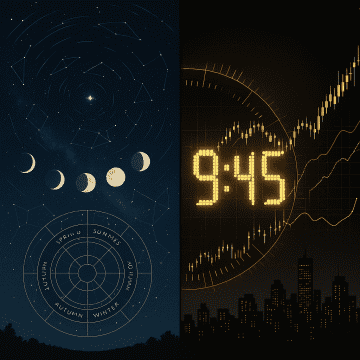 In Mesopotamia, priest‑astronomers watched these patterns carefully and built a numerical language around them. They favoured a base‑60 number system and used it to divide the circle into 360 degrees, then split each degree into 60 minutes and each minute into 60 seconds. The same structure shaped how they broke up hours and tracked celestial cycles. Time and space were described in the same units, all keyed to the apparent motion of the heavens.
Their calendar tried to follow both Moon and Sun. Months were based on lunar cycles, but extra months had to be added now and then to keep the year in step with the seasons. In other words, the calendar was a negotiated rhythm between the sky, the fields and the needs of the palace.
Other cultures took this tuning even further. The Maya, for example, interlocked a 260‑day sacred calendar with a 365‑day solar calendar and longer “count” cycles to harmonise ritual life with solar, lunar and planetary movements. Timekeeping was not just about administration; it was about staying in relationship with the larger pattern of nature.
Compared with this, our modern system looks very different. The dominant calendar is tuned just enough to keep civil time roughly aligned with the Sun, but most of our practical time – work hours, interest periods, financial quarters – is organised around accounting needs, not moonrises or planting seasons. The clock still uses Mesopotamian numbers, but the rhythm it serves is increasingly financial rather than ecological.
This is where the “time machine” metaphor sharpens. Ancient sky clocks tried to keep human time inside the cycles of the world. A modern credit system, crowned by institutions like the Bank of England, can run its own timetable: interest compounding in the dark, repayment schedules indifferent to droughts, recessions or the phase of the Moon. It is a clock that demands reality adjust to it, instead of the other way round.
From temple accounts to national credit
Put together, early debt and this numerical view of time created a new kind of social technology. Temples, palaces and large households:
-
Recorded promises that stretched into the future
-
Measured time and space in units designed for division
-
Used law and administration to enforce what was written on clayics.
Modern finance works in recognisably similar ways. Governments and banks issue claims today – bonds, loans, mortgages – that are promises on future income, taxes and production. The numbers sit in ledgers and databases, but they reach forward into people’s lives for years or decades.
5. The Bank of England: an upgrade of an old idea
When the Bank of England was founded in 1694, it did not invent credit from nothing. What it did was concentrate and formalise this older logic at the heart of a modern state.
By lending to the government against future tax receipts, the Bank created a liquid market in public debt that could be bought and sold. That made it easier to finance war, infrastructure and expansion on a scale that would have been difficult for a scattered network of private lenders to match. Over time, this credit engine supported industrial investment, imperial projects and the growth of a financial centre that influenced the entire global system.
The obligations it created, however, were not designed to be periodically wiped away in the manner of ancient debt cancellations. Public debt could roll over, compound and be refinanced, while private credit expanded on top of it. This did not single‑handedly create modern class structures, but it gave the creditor–debtor relationship a new stability and reach. Access to credit and ownership of financial claims became an increasingly important part of how wealth and influence were distributed.
Seen this way, calling the Bank of England a “time machine” is not just poetic licence. It names a specific function: turning expectations about the future labour and taxes of millions of people into present‑day financial power that can be mobilised by a relatively small group of institutions and investors. Compared with the temple economies of Mesopotamia, the mechanism is more continuous, more abstract and more deeply embedded in the everyday workings of a nation.
A time machine doesn’t need to be a physical machine. It only needs to change the future in a very real way. In our world, that role belongs to the modern banking system: today’s central bankers act as quiet time‑keepers, administering a machine that shapes tomorrow’s reality in ways few truly understand.
Read Part 2 – Rethinking Banks for a More Natural World