How 28 Lawyers Discovered the Origin Story of the City of London
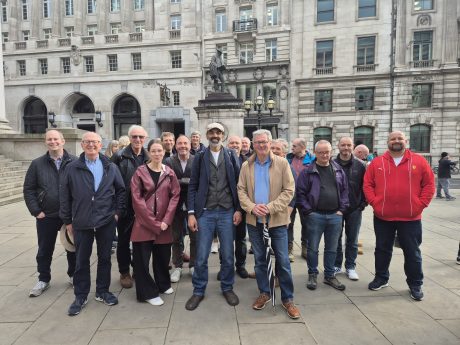
In spring 2025, I received an enquiry from a partner at Brabners, a leading independent law firm in the UK. They were bringing a group of partners and senior lawyers to London for a conference at the Leonardo Royal London St Paul’s and wanted “a private tour to walk around the City and get a feel for its history and development.”
That phrase – “get a feel for its history and development” – immediately resonated. They weren’t looking for a checklist of landmarks. They wanted to understand what the City of London actually is: how this compact territory evolved, how its ancient rights and independence developed, and how all of that still shapes the City’s role today. That is precisely what my City of London “Origin Story of the Square Mile” tour is designed to do.
How I Normally Tell the City’s Story
My standard City of London Historical Walking Tour usually begins near the remains of the Roman wall and fort. There, I introduce the wall not as a static ruin, but as a central character in the City’s story – defining boundaries, channelling growth and helping to safeguard the independence, customs and political stance that came to distinguish the Square Mile apart from the rest of the country.
From that Roman starting point, we normally move forward through the centuries, tracing how each wave of people – Romans, Saxons, Normans and later powers – leaves its mark in law, custom and civic structure. The tour is built as a narrative of continuity and change, showing how those layers still shape the modern City.
Adapting the Route for Brabners
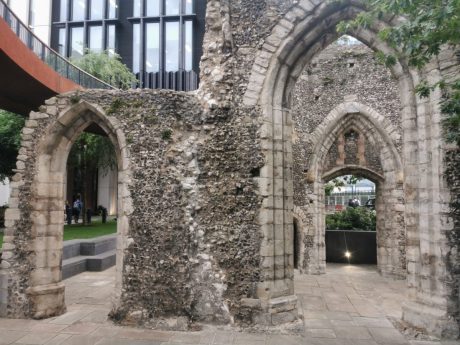
For Brabners, I adapted the route in two key ways.
First, to work around their conference schedule and location, I met the group at their hotel by St Paul’s and led them on foot to our first main stop. Second, they had expressed a particular interest in the medieval City rather than spending too long in the earliest Roman foundations.
With that in mind, we began at Salters’ Hall. Starting at a livery company allowed us to open amid guilds, charters and self‑governance at the point where the City’s medieval character really asserts itself. It’s an ideal place to talk about how organised trades, civic responsibility and long‑standing privileges intertwine.
From there, we followed a story that connected what we saw on the streets to the long development of the City as an independent and influential entity.
A Legal Audience and a Deep History of Law
One of the central themes of this tour is how the laws and customs of each era leave a lasting imprint – from Roman concepts of order and infrastructure, through medieval charters and liberties, right up to the City’s contemporary powers and ceremonial roles.
Guiding a group of experienced lawyers through that story was a valuable test of the originality and depth of my material. Rather than offering general anecdotes, I focused on how specific moments, settlements and compromises shaped the City’s status and its relationship with the rest of the country.
The feedback afterwards was encouraging: several of them said they had gained genuinely new insights into the history of English law and how the City’s unique position fits within it. That kind of response told me that the tour’s legal and historical through‑line works not just for general visitors, but also for people immersed in law professionally.
Scaling the Experience for 28 People
The original enquiry mentioned around 20 lawyers. As interest grew, the final number reached 28 adults – far beyond the size I usually accept for a private tour.
Rather than splitting the group or diluting the experience, I re‑thought how to deliver the same narrative with a larger audience:
-
I tested and brought a voice amplifier so everyone could hear comfortably, even in narrow streets or busy areas.
-
We allowed extra time, extending the tour so movement and questions didn’t break the thread of the story.
-
I adjusted the pacing and choice of stops to keep the group cohesive while still visiting locations that illustrate key turning points in the City’s history.
This meant we could preserve the feel of a coherent, story‑driven walk, even though the group was closer to a conference breakout in size than a typical private tour.
What We Explored Together
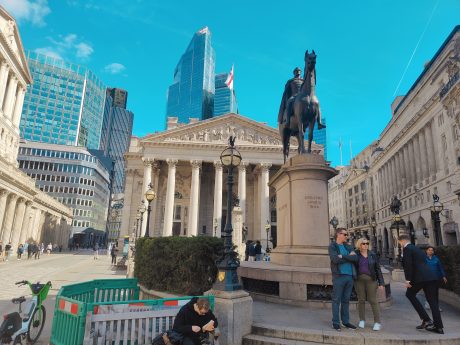
Over the course of the afternoon, we moved thro
ugh a carefully chosen sequence of places that made the City’s long development tangible.
We looked at how:
-
The City’s ancient rights and independence were asserted, defended and renewed over time, giving the Square Mile a distinct status within England.
-
Trade and banking reshaped the City’s institutions and extended its influence far beyond its physical boundaries.
-
The City’s historic autonomy still plays out today, not only in its role as a global financial centre, but also in its representation abroad and its formal presence in Parliament via the City Remembrancer.
The focus remained firmly on how the City’s legal, economic and civic identity grew over time and why that still matters to anyone working with London, law or business today.
Why This Kind of Tour Suits Professional Groups Like Brabners
For many visiting professionals, the City of London can feel strangely abstract: a place of deals, institutions and regulations, but not always a place with a clearly understood character or story. Yet the City has a very strong spirit of its own, rooted in independence, negotiation and a sense of continuity with its past.
My tours are built around narrative points rather than isolated sights. That structure suits professional groups particularly well. Participants aren’t just told historical facts; they are invited to connect with the underlying spirit of the City – to see how traditions, rights and institutions have grown out of real pressures and choices over many centuries.
For a firm exploring its own presence in the City, or simply wanting to understand the ground beneath their feet, that kind of experience can transform the Square Mile from a vague backdrop into a living context they can relate to and navigate with greater understanding.
A Living Origin Story
Since that visit, Brabners have gone on to deepen their involvement with London, underlining how important the City is to their work and their clients. For me, it was satisfying to know that when those 28 lawyers now walk through the Square Mile, they do so with a richer sense of the long story they are stepping into.
For other legal, financial and professional groups, the same “Origin Story of the Square Mile” tour can be tailored in similar ways:
-
Starting and finishing near your hotel or conference venue.
-
Emphasising the strands of history most relevant to your interests, while preserving the integrity of the core narrative.
-
Scaling up with careful route design and audio support without losing depth.
If you would like your team to meet the City not just as a place of business, but as a long, unfolding story of law, rights and independence, this is exactly what the tour is designed to offer.