Mystical Tour into the West Country with Dragon Lore Tours
A week in the West Country can link ancient monuments, woodland, and coastline into one continuous journey through history and myth. This outline shows how each place stands both in the record and in the way many visitors now approach it spiritually.
Avebury and the Ancient Landscape
Avebury stone circle – Large Neolithic henge and stone circle built in the third millennium BCE, enclosing part of the present‑day village. Spiritually, many people treat it as an open, walk‑through temple for meeting ancestral and land energies in a relaxed way.
Silbury Hill – Artificial prehistoric mound about 30 metres high, constructed around 2400 BCE with no confirmed practical function. It is often viewed as a symbolic world‑hill or earth‑mound for connecting with the land as a whole rather than a single monument.
West Kennet Long Barrow – Neolithic chambered long barrow dating to about 3600 BCE, used for collective burials over several centuries. Visitors commonly use the interior as a quiet space for ancestor work, death‑and‑rebirth themes, and grounding before or after Avebury.
The Sanctuary – Site of a former timber and later stone circle at the end of the West Kennet Avenue, now marked by concrete posts. It often functions as a threshold spot, a place to “arrive” in the ritual landscape before walking towards the main circle.
Savernake Forest (ancient oaks) – Historic woodland with centuries‑old oak trees, long managed as a private forest with public access on certain paths. The old, contorted oaks are used as natural shrines for tree communion, forest listening, and stag/woodland symbolism.
Crop Circle Centre (optional) – Visitor centre presenting information and interpretations of recent crop circle formations in the region. It speaks mainly to modern mystery traditions, offering a space for those drawn to contemporary signs and patterns in the fields.
Stonehenge Area
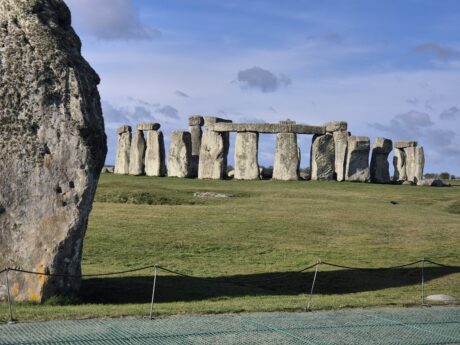
Stonehenge – Prehistoric stone circle and earthworks built roughly 3000–2000 BCE, aligned with the solstices within a wider ritual landscape. Many people approach it as a solar and seasonal temple, focusing on sunrise, sunset and the turning year.
Woodhenge – Neolithic timber circle near Stonehenge, now shown by concrete markers in place of the original posts. Spiritually it is sometimes paired with Stonehenge as a “living” or wooden counterpart, useful for life‑cycle and transition work.
Glastonbury / Avalon
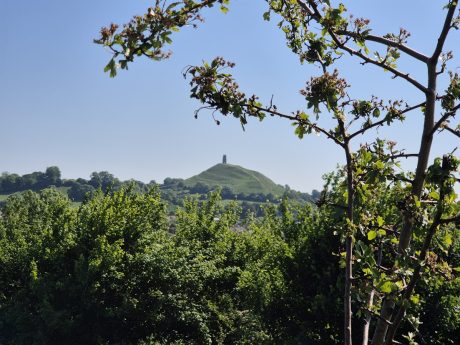
Glastonbury Tor – Prominent hill topped by St Michael’s Tower, linked with Avalon, Christian stories and Celtic Otherworld motifs. It is widely treated as a place of vision and threshold work, with the climb itself used as a simple embodied practice.
Chalice Well – Spring and landscaped garden with iron‑rich water near the Tor, associated with Christian and esoteric traditions including the Grail. People use it as a gentle setting for blessing, quiet ritual with water, and steady heart‑centred reflection.
White Spring temple – Capped spring opposite Chalice Well, housed in a dark, candlelit structure used as a devotional water space. The enclosed atmosphere supports deeper, more internal work with emotion, shadow, and personal thresholds.
Glastonbury Abbey – Ruins of a major medieval Benedictine abbey, later tied to claims of King Arthur’s burial. The open grounds lend themselves to slow walking, integrating Christian, Celtic and Arthurian themes in a quiet, non‑formal way.
Wearyall Hill – Ridge overlooking Glastonbury, associated with Joseph of Arimathea and the Holy Thorn tree. Many visitors use it as a simple place for arrival, gratitude and overview before or after time in town.
St Margaret’s / Magdalene Chapel – Small medieval chapel and former almshouse in Glastonbury, historically used for charitable housing and worship. The modest scale and history of care support low‑key, honest intentions around healing and service.
Dartmoor: Tors and Ancient Woods
Brent Tor – Volcanic outcrop on the edge of Dartmoor with the small church of St Michael de Rupe on its summit. The combination of height, exposure and church setting suits clear, straightforward prayer or intention‑setting.
Wistman’s Wood – Fragment of ancient upland oak woodland with twisted, moss‑covered trees and boulders. It is often treated as a strong “otherworldly” site for meeting forest, ancestor and spirit‑of‑place currents with care.
North Cornwall Coast
Tintagel headland / castle area – Coastal site with medieval castle ruins, strongly associated in literature with King Arthur’s conception. For many visitors it provides a setting to reflect on story, lineage and guidance with the Atlantic as backdrop.
Merlin’s Cave / Tintagel shoreline – Sea cave beneath the headland, named in later tradition after Merlin and accessible at low tide. It is often used as a physical focus for “threshold” or beginning‑of‑journey work connected to Arthurian themes.
St Nectan’s Glen waterfall – Wooded valley with a waterfall falling through a rock arch, linked to a hermit‑saint tradition. Pilgrims commonly visit for cleansing, simple offerings and quiet time with the sound of water.
Museum of Witchcraft and Magic (Boscastle, optional) – Museum presenting historical and contemporary material on ritual magic, folk practices and witchcraft. It offers context for how different strands of ritual practice have been expressed in this region and beyond.
Additional Ancient Sites (Optional)
Stanton Drew stone circle – Complex of Neolithic stone circles and associated features near Stanton Drew in Somerset. Visitors often value it as a quieter, less‑visited stone setting for unhurried time among the stones.
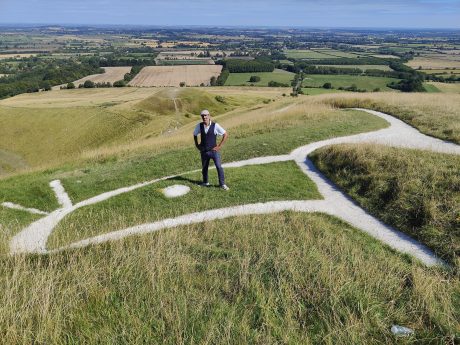
Uffington White Horse and Dragon Hill – Prehistoric hillside chalk horse figure with a nearby flat‑topped mound called Dragon Hill in Oxfordshire. The pairing is frequently used for work with landscape symbols of horse, dragon, sun and movement.
Cerne Abbas Giant – Large chalk hill figure of a nude male with club above Cerne Abbas in Dorset, of uncertain date and origin. It is sometimes approached for direct, earthy themes of vitality, fertility and embodied life.
Source of the River Thames (Thames Head) – Area near Kemble in Gloucestershire traditionally identified as the river’s source, with seasonal springs. Spiritually inclined visitors may use it for “beginning” rites linked to flow, journeys and new phases.
Towns, Spas and Hills (Optional)
Bath (city and Abbey) – Historic city known for Roman baths, Georgian architecture, and Bath Abbey in the centre. Some visitors combine the Roman water heritage and Abbey space as a way to reflect on continuity of healing and worship.
Bath Spa (modern spa) – Modern spa complex using the city’s natural hot springs, with thermal pools and treatments. It offers a straightforward setting for physical relaxation and reset between more demanding landscape days.
Malvern area – Town and surrounding Malvern Hills known for spring water and long ridge walks. The combination of springs and views supports clean, simple practices like walking reflection and drinking from the wells.
Mendip Hills – Limestone hill range in Somerset with caves, gorges and viewpoints, designated an Area of Outstanding Natural Beauty. Practitioners sometimes use the caves and high points for work with underworld/inner spaces and open‑sky clarity.
Taken together, these sites give you a toolbox of landscapes, stories and atmospheres you can combine into a week that is historically grounded and spiritually focused, without needing to lean on commercial tourism.