Grand Bazaar
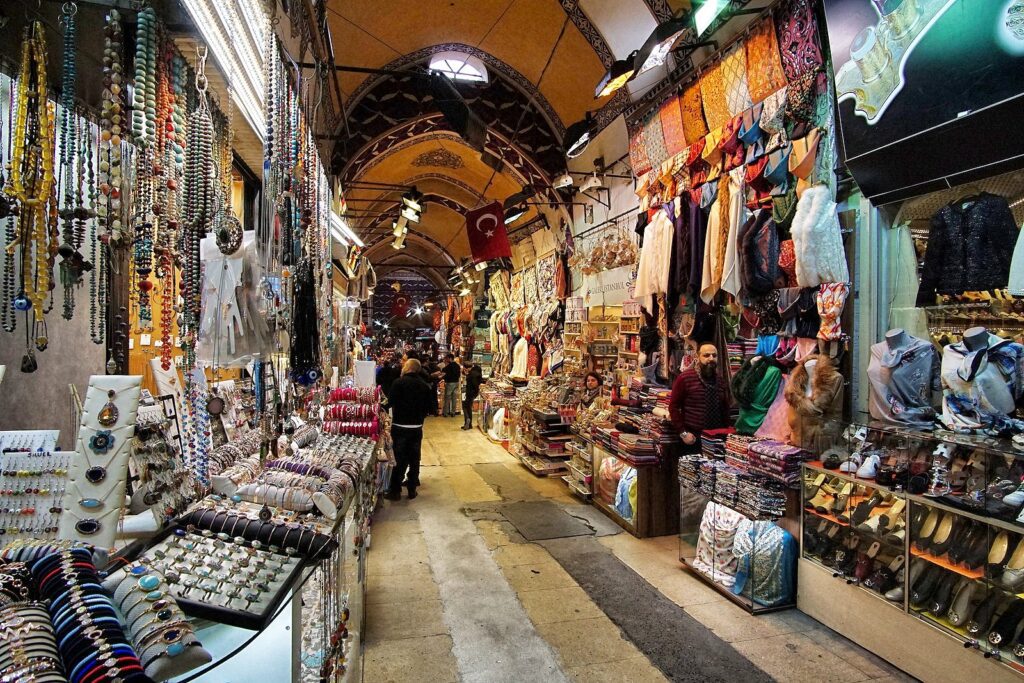
The Grand Bazaar (Kapalıçarşı) in Istanbul is one of the world’s oldest and largest covered markets, a sprawling maze of vaulted streets that has served as a commercial heart of the city since the 15th century. Today it combines centuries‑old Ottoman architecture with a dense mix of shops selling everything from jewellery and textiles to spices and handmade crafts.
Begun shortly after the Ottoman conquest of Constantinople under Sultan Mehmed II, the bazaar grew around two fortified market halls (bedestens) devoted to high‑value goods such as textiles and jewellery. Over time it expanded into a vast covered district of intersecting streets and hans (inns), becoming a key node in the trade routes that linked Europe, the Middle East and Asia.
The Grand Bazaar sits on a hill between the Beyazıt, Çemberlitaş and Nuruosmaniye districts of Istanbul’s historic peninsula, a short walk from landmarks such as the Süleymaniye Mosque and the Blue Mosque area. The closest tram stops are Beyazıt–Kapalıçarşı and Çemberlitaş on the T1 line; from either stop, signed entrances lead directly into the covered streets of the bazaar
-
One of the earliest “shopping malls”The Grand Bazaar is often described as an early prototype of the modern shopping mall, with dozens of specialised streets, each historically associated with a particular craft or trade. Visitors still encounter areas traditionally devoted to goldsmiths, carpet sellers, leather goods and copperware, reflecting the guild‑like organisation of Ottoman commercial life.
-
A city within a cityThe complex covers roughly 30,000 square metres, incorporating over 60 covered streets and around 3,000–4,000 shops, along with mosques, fountains and old caravanserai courtyards. This density creates the feeling of a self‑contained city, where daily rhythms of prayer, bargaining and socialising play out under a canopy of domes and arches
-
Built for security and resilienceThe original bedestens were solid, fire‑resistant structures with thick walls, iron gates and secure inner chambers designed to protect precious goods and records. After fires and earthquakes in later centuries, much of the surrounding market was rebuilt in masonry, giving the bazaar its characteristic brick and stone vaulting that has helped it endure to the present.
-
Evolving with Ottoman powerAs the Ottoman Empire expanded, the bazaar became a showcase for goods arriving from across the Mediterranean, Balkans, Arabia and beyond, mirroring Istanbul’s status as an imperial capital. Its prosperity rose and fell with political and economic shifts, but it remained a key barometer of the city’s commercial health for centuries
-
Living heritage and tourist magnetToday the Grand Bazaar is both a working marketplace for locals and a major attraction for visitors, drawing hundreds of thousands of people on busy days. Despite modern pressures, traditional crafts such as carpet weaving, jewellery‑making and metalwork continue inside its shops and workshops, making it a living museum of Ottoman‑influenced urban culture