The History of the History of King Arthur
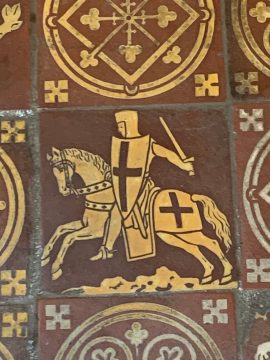
King Arthur is not a single ancient story preserved unchanged through time. He is a cumulative literary construction, built layer by layer by Welsh storytellers, Latin chroniclers, Norman adapters, French romance writers, anonymous prose compilers, English poets, printers, Victorian revivalists, and modern filmmakers.[cite:86][cite:87][cite:64] The history of King Arthur is therefore also the history of how different ages imagined kingship, fellowship, enchantment, sanctity, adultery, national memory, and political collapse.[cite:84][cite:81][cite:78]
Chronology of Arthurian writings and key contributions
This chronology is also a map of the article that follows. Each stage preserves something from earlier Arthurian tradition, adds new emphases, and leaves something behind.[cite:86][cite:64]
Before Geoffrey: the early Welsh and Brittonic Arthur
Before Arthur became the centre of a coherent literary universe, he circulated in early Welsh and Brittonic tradition as a more elusive figure.[cite:87][cite:120] These early traces do not yet give a full biography, but they show Arthur already surrounded by prestige, battle memory, marvel, and the aura of a name larger than ordinary heroes.[cite:120][cite:122]
One of the earliest major textual witnesses is the Historia Brittonum, usually dated to the 9th century, which presents Arthur as a military leader connected with a sequence of battles fought on behalf of the Britons.[cite:120][cite:122] This is not yet the Arthur of courtly romance, adultery, the Grail, or the Lady of the Lake; it is a martial Arthur, poised between chronicle and legend.[cite:120][cite:87]
A different early layer survives in the Welsh tale Culhwch and Olwen, often described as the oldest preserved Arthurian narrative.[cite:111][cite:114] Here Arthur is not primarily a solitary war leader but the lord of a dazzling heroic court filled with named companions, giant hunts, magical tasks, and folkloric energy.[cite:111][cite:114] This Arthurian world is already expansive, but its logic is closer to heroic wonder-tale than to the polished moral and emotional architecture of later French romance.[cite:114][cite:116]
These early materials matter because they preserve the raw imaginative matter from which later writers built their grander structures.[cite:120][cite:116] They give Arthur fame, companions, combat, and marvels, but they leave open nearly everything that later authors will define in detail: genealogy, kingship, imperial ambition, courtly love, Grail theology, and tragic downfall.[cite:87][cite:120]
Geoffrey of Monmouth: Arthur becomes history
The decisive turning point comes with Geoffrey of Monmouth’s Historia Regum Britanniae, written in the 1130s.[cite:86][cite:84][cite:92] Geoffrey did not merely collect earlier legends; he transformed Arthur into a central figure in a sweeping pseudo-history of Britain and gave him a reign that felt politically monumental.[cite:84][cite:86]
In Geoffrey’s telling, Arthur is a conqueror-king of extraordinary stature, one who wages wars, rules magnificently, and belongs to the long line of British kings.[cite:86][cite:80] Merlin is drawn into this architecture through prophecy and dynastic drama, helping fuse mythic wonder with an apparently historical national narrative.[cite:84][cite:86] The work proved astonishingly influential and survives in hundreds of manuscripts, evidence of how powerfully it answered the medieval appetite for origins and heroic precedent.[cite:84][cite:86]
What Geoffrey adds is coherence, scale, and political force.[cite:84][cite:86] What he leaves out is equally important: this is not yet the Arthur of inward psychological romance, central adulterous love, or Grail mysticism.[cite:92][cite:86] Guinevere, Merlin, and Arthur are present, but the later emotional and symbolic density attached to them remains largely undeveloped.[cite:92][cite:86]
In Geoffrey’s present, Arthur became a usable past: a figure through whom Britain could imagine antiquity, legitimacy, and greatness.[cite:84][cite:86] In the future, Geoffrey’s book became the indispensable foundation for romance writers, translators, and national mythmakers across Europe.[cite:84][cite:92]
Wace: Arthur becomes courtly and social
Around 1155, the Norman poet Wace adapted Geoffrey into Old French verse in the Roman de Brut.[cite:83][cite:81] This matters not because Wace invented Arthur, but because he translated Geoffrey’s Latin pseudo-history into the vernacular world of aristocratic entertainment and chivalric self-recognition.[cite:83][cite:65]
Wace keeps the broad narrative architecture of Geoffrey, but he changes the legend’s social atmosphere.[cite:81][cite:83] His most famous contribution is the Round Table, introduced as a means of preventing disputes over precedence among Arthur’s companions, thereby turning the court into an image of ordered fellowship.[cite:81][cite:83] The Round Table is one of the great inventions of Western myth because it condenses political order, elite rivalry, and symbolic equality into a single memorable form.[cite:81][cite:83]
Wace also moderates Geoffrey’s harder chronicle ambition.[cite:81][cite:83] Arthur remains kingly and prestigious, but the story now breathes more easily in the atmosphere of noble court culture, where behaviour, reputation, and ceremonial values matter as much as conquest.[cite:81][cite:65] Wace even shows caution toward some marvellous materials, indicating a somewhat more selective attitude to the wilder legendary inheritance.[cite:83]
In Wace’s own society, Arthur became more available to French-speaking noble culture in England, Normandy, and beyond.[cite:65][cite:83] In the long run, the Round Table alone ensured Wace a permanent place in the legend’s evolution, even where his name disappeared from general memory.[cite:81][cite:83]
Chrétien de Troyes: Arthur becomes romance
In the later 12th century, Chrétien de Troyes transformed Arthurian material into literary romance.[cite:64][cite:70][cite:78] His major works, including Érec et Énide, Cligès, Lancelot, Yvain, and Perceval, are why he is so often called a founder or father of Arthurian romance.[cite:60][cite:63][cite:70]
Chrétien inherits Geoffrey’s king and Wace’s courtly world, but he shifts the centre of gravity away from national history and toward the knightly individual.[cite:64][cite:78] Arthur is often still present as the symbolic centre, yet the real drama lies in the adventures, desires, humiliations, vows, loves, and tests of his knights.[cite:60][cite:78] The result is a new kind of storytelling in which the court becomes a launching-place for personal quests and ethical ordeals.[cite:64][cite:78]
This shift has immense consequences. In Lancelot, Chrétien helps fix the literary importance of Lancelot and the courtly love dynamic that will later become inseparable from Guinevere.[cite:60][cite:64] In Perceval, he gives the first extant Grail procession and wounded Grail king, seeds that later develop into the full Fisher King and Grail quest traditions.[cite:40][cite:60][cite:64]
What Chrétien leaves behind is Geoffrey’s priority of grand political history.[cite:64][cite:86] Arthur himself becomes less the conquering protagonist and more the presiding centre of a world where individual moral and emotional formation matters most.[cite:60][cite:78] This change may be the single most important reason Arthurian literature remained fertile: it made the legend modular, so any knight, quest, or crisis could become a story.[cite:64][cite:78]
In Chrétien’s own world, these romances mirrored aristocratic concerns with honour, desire, and refinement.[cite:63][cite:78] For later centuries, they became the narrative DNA of much of European romance, shaping everything from Grail literature to modern fantasy quests.[cite:64][cite:78]
Robert de Boron: Arthur enters salvation history
Around 1200, Robert de Boron becomes a crucial bridge figure in Arthurian development.[cite:121][cite:117][cite:115] His Joseph d’Arimathie identifies the Grail with the vessel of the Last Supper and with the blood of Christ, and his Merlin more firmly links Arthurian material with Christian sacred history.[cite:117][cite:121]
This is a major conceptual change.[cite:121][cite:124] Chrétien had introduced the Grail in a mysterious and still relatively undefined form, but Robert gives it theological specificity and a sacred genealogy.[cite:117][cite:121] Merlin also changes: he is no longer simply an uncanny prophet and political adviser, but a more deeply Christianised figure whose role is tied to providence, the Grail, and the shaping of Arthur’s kingdom.[cite:115][cite:124]
Robert and the prose Merlin tradition attached to his name also strengthen several elements that became standard in later Arthurian imagination: the sword-in-the-stone episode, the fuller role of Merlin in Arthur’s rise, the religious significance of the Round Table, and the growing importance of the Lady of the Lake tradition through Merlin’s relationship with Viviane or Nimue.[cite:115][cite:123][cite:124] These developments do not erase Geoffrey and Chrétien, but they overlay their work with a more overtly Christian symbolic pattern.[cite:121][cite:124]
What Robert leaves out is the relative openness of Chrétien’s symbolism.[cite:117][cite:121] His contribution is to define and align: to explain where the Grail comes from, why Merlin matters in a sacred sense, and how Arthurian kingship belongs to a providential drama larger than Britain alone.[cite:117][cite:124]
The Vulgate Cycle: the great prose synthesis
The Vulgate Cycle, also known as the Lancelot-Grail Cycle, was composed in the early 13th century and is one of the decisive monuments of Arthurian literature.[cite:96][cite:102][cite:108] It is not a single short work but a vast prose architecture that takes Arthur from the sacred history of the Grail through Merlin, Lancelot, the Grail Quest, and finally the destruction of Arthur’s world.[cite:96][cite:108]
This is where many readers encounter something very close to the “complete Arthurian myth” as later centuries understood it.[cite:105][cite:108] The Vulgate writers gather earlier materials from Geoffrey, Wace, Chrétien, and Robert de Boron, then integrate them into a connected narrative universe with stronger continuity and stronger Christian teleology.[cite:102][cite:108][cite:124]
Several developments here are crucial. Lancelot’s life is expanded enormously; the love of Lancelot and Guinevere becomes central to the moral instability of Arthur’s kingdom; Galahad emerges as the pure knight destined to complete the Grail quest; and Arthur’s fall is woven into a tragic chain where spiritual failure and political catastrophe become inseparable.[cite:96][cite:108][cite:107] Merlin’s role is enriched, and the Round Table is given deeper sacred resonances through its relation to Grail history.[cite:124][cite:108]
The Vulgate Cycle also deepens the Lady of the Lake tradition.[cite:104][cite:108] Here the water-enchanted foster mother of Lancelot, the magical woman of the lake realm, and the giver or guardian of wondrous weapons and wisdom become more fully realised presences within the Arthurian cosmos.[cite:104][cite:108] What later audiences imagine as a single iconic Lady of the Lake is really the product of this gradual medieval consolidation.[cite:104]
What the Vulgate leaves out, or rather subordinates, is the looser and more exploratory quality of earlier verse romance.[cite:102][cite:108] It turns Arthurian legend into an enormous moral-historical machine, more unified, more theological, and more committed to showing how the world of Arthur contains the seeds of its own ruin.[cite:96][cite:107]
In its own day, the Vulgate Cycle gave readers a complete prose Arthur suited to broad circulation and sustained reading.[cite:102][cite:108] In the future, it became one of the principal source-beds for late medieval and early modern Arthur, above all for Malory.[cite:107][cite:103]
The Post-Vulgate: tightening the tragedy
The Post-Vulgate Cycle, composed later in the 13th century, reworks the Vulgate material rather than replacing it from scratch.[cite:113][cite:108] Its revisions often reduce the sheer bulk of Lancelot’s secular adventures and bring the Grail quest and Arthur’s doom into a tighter, more tragic relation.[cite:113][cite:108]
This matters because Arthurian history is not just additive; it is editorial.[cite:113][cite:96] The Post-Vulgate shows medieval writers already curating the tradition, deciding what deserves emphasis and what should recede.[cite:113] In broad terms, it heightens spiritual seriousness and intensifies the collapse that follows the failure of the Round Table to remain pure or united.[cite:113][cite:108]
Sir Gawain and the Green Knight: the testing of chivalry
In the late 14th century, Sir Gawain and the Green Knight offers one of the greatest alternative angles on Arthurian literature.[cite:101] It is not a full history of Arthur’s reign, but a tightly crafted Middle English poem that places Arthur’s court at the start and then follows Gawain through a profound moral and symbolic trial.[cite:101]
The poem is rooted in the broader Arthurian world, yet it differs in focus and tone from the great prose cycles.[cite:101][cite:107] Its drama lies in the beheading challenge, the winter journey, the seduction scenes, the exchange-of-winnings game, and the final exposure of Gawain’s fear and self-protective concealment.[cite:101] Instead of narrating the rise and fall of the kingdom, it examines whether a Round Table knight can actually live up to the ideals his world proclaims.[cite:101]
What it adds is psychological subtlety of a high order.[cite:101] Shame, confession, mortality, temptation, courage, and compromise become the centre of attention, and the Green Knight story thereby gives Arthurian literature one of its most sophisticated meditations on the gap between heroic image and human reality.[cite:101] It leaves out the grand total history of Arthur, but in doing so it reveals the moral texture of the society those larger histories idealise.[cite:101]
Malory: the English Arthur takes shape
Sir Thomas Malory’s Le Morte Darthur, completed around 1470 and printed by William Caxton in 1485, is the first great English prose synthesis of the Arthurian legend.[cite:106][cite:103][cite:100] For readers in English, this became the single most influential medieval Arthurian book.[cite:106][cite:103]
Malory did not invent Arthurian legend from nothing.[cite:100][cite:106] He drew heavily on French prose cycles, above all the Vulgate and related material, and recast them into an English narrative stretching from Arthur’s miraculous rise to the final catastrophe of Camlann and the passing of the king.[cite:100][cite:103][cite:106] His work includes the sword in the stone, Merlin, the marriage to Guinevere, Lancelot’s rise, the Grail quest, the breakup of the Round Table, and Arthur’s departure toward Avalon.[cite:103][cite:106]
What Malory adds is not raw invention so much as arrangement, compression, and tone.[cite:100][cite:106] He simplifies some of the theological density of the French prose cycles, gives the whole tradition a firmer tragic momentum, and presents chivalric fellowship as both glorious and fatally unstable.[cite:100][cite:103] His Arthurian world feels more immediate to many modern readers because it is less diffuse than the Vulgate and more overtly shaped as an ending.[cite:103][cite:106]
What Malory leaves out are many of the Vulgate’s more extended doctrinal and narrative elaborations.[cite:100][cite:103] He strips the material into a tragic English classic centred on loyalty, honour, adultery, kinship conflict, and the collapse of a noble order under the weight of its own contradictions.[cite:103][cite:106]
Malory’s influence on later English-speaking society is immense.[cite:106][cite:103] For many readers, writers, artists, and filmmakers, Malory becomes the main channel through which medieval Arthur enters modern culture.[cite:103][cite:106]
Revival, reinvention, and modern Arthur
After the Middle Ages, Arthur did not disappear; he was repeatedly rediscovered and remade.[cite:91][cite:92] In the 19th century, the Romantic and Victorian revivals gave Arthur fresh life as a moral, nostalgic, and national symbol.[cite:91][cite:92] Writers and artists found in Camelot an image of an ideal order already shadowed by loss, a combination especially attractive in periods of social change and imperial self-reflection.[cite:91][cite:92]
By the modern period, Arthur had become less a single literary text than a mythic repertoire.[cite:92][cite:42] Film, illustrated books, retellings for children, fantasy novels, and popular culture distilled the vast medieval tradition into a set of unforgettable images: Excalibur, the sword in the stone, the Lady of the Lake, Merlin, Guinevere, Lancelot, the Round Table, Camelot, Mordred, Avalon, and the once-and-future king.[cite:42][cite:92][cite:104]
This modern Arthur is highly selective.[cite:42][cite:92] Geoffrey’s imperial war king survives only faintly, while the Arthur most people recognise is the result of later accretions: Wace’s Round Table, Chrétien’s Lancelot and Grail atmosphere, Robert de Boron’s Christian Grail logic, the Vulgate’s complete narrative cosmos, Malory’s English tragic synthesis, and modern cinema’s appetite for visual myth.[cite:83][cite:60][cite:121][cite:108][cite:106][cite:42]
The Lady of the Lake and the making of iconic Arthur
The Lady of the Lake is a perfect example of how Arthurian tradition develops by accumulation.[cite:104] She is not born fully formed in the earliest strata as the singular figure modern audiences know.[cite:104][cite:60] Rather, she emerges over time from French romance and prose tradition as a water-associated enchantress, foster mother of Lancelot, magical teacher, political actor, and giver or receiver of enchanted weapons.[cite:104][cite:108][cite:124]
This gradual consolidation is why modern audiences can feel that the Lady of the Lake has always been central, even though her most recognisable functions are the result of later medieval synthesis and still later visual simplification.[cite:104][cite:108] Films such as Excalibur give us the distilled icon: the hand from the water, the sword of kingship, the feminine Otherworld source of legitimacy and return.[cite:42][cite:104]
Building by leaving out
Arthurian history advances not only by invention but by omission.[cite:84][cite:113] The early Welsh materials offer marvel and heroic energy but leave kingship underdefined.[cite:111][cite:120] Geoffrey supplies national history but leaves the intimate emotional world relatively spare.[cite:86][cite:92] Wace softens history into courtliness and gives a social image of equality under monarchy.[cite:81][cite:83]
Chrétien shifts attention to the knight’s inward life and leaves behind Arthur as sole protagonist.[cite:60][cite:78] Robert de Boron and the Grail tradition define the sacred meaning of mysteries that Chrétien had left suggestive.[cite:117][cite:121] The Vulgate imposes a great coherent arc but sacrifices some of the openness of verse romance.[cite:102][cite:108] The Post-Vulgate trims and tightens. Gawain’s Green Knight story ignores the total history in order to deepen moral testing.[cite:113][cite:101] Malory compresses the whole inheritance into a tragic English masterpiece, leaving modern culture with a version of Arthur that feels both definitive and haunted.[cite:106][cite:103]
What Arthur has meant, and what Arthur means now
In the Middle Ages, Arthur could mean ancient British legitimacy, aristocratic fellowship, courtly desire, Christian quest, or the fragility of earthly greatness, depending on the text.[cite:84][cite:81][cite:107] Each author reinterpreted him for present needs, and society responded because Arthur was flexible enough to embody both ideal order and the inevitability of its fracture.[cite:84][cite:78][cite:108]
Now, Arthur usually means something more composite.[cite:42][cite:92] Modern public imagination tends to be dominated by the visual and emotional cluster formed by Excalibur, the Lady of the Lake, Merlin, Guinevere and Lancelot, Camelot, betrayal, and the fall of a radiant kingdom.[cite:42][cite:104][cite:106] That image is not false; it is simply the end result of nearly a millennium of selection and recombination.[cite:92][cite:108]
Arthur still matters because he lets every age ask the same questions in a new form: What makes a ruler legitimate? Can fellowship survive ambition and desire? Does purity belong in the world or only in vision? Can a broken order return?[cite:84][cite:107][cite:106] The history of Arthur is therefore not just the story of one king, but the story of how Europe, and now global popular culture, has repeatedly imagined the rise and fall of a sacred centre.[cite:86][cite:92][cite:42]