Duke of Wellington Statue (Bank Junction)
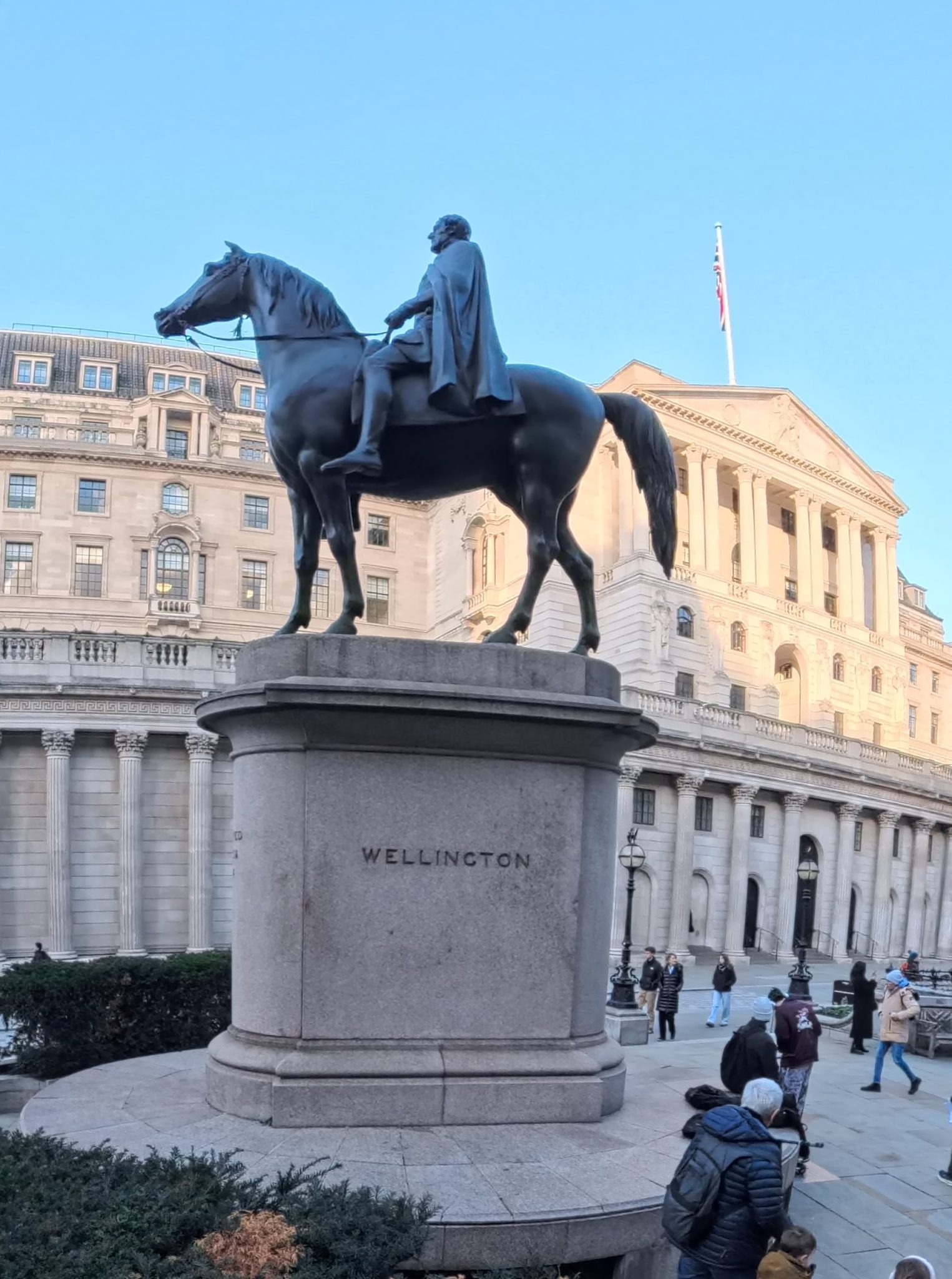
The Duke of Wellington statue is an equestrian monument standing directly in front of the Royal Exchange, looking out over Bank Junction at the meeting point of the City’s main financial streets. It depicts Arthur Wellesley, 1st Duke of Wellington, the general who defeated Napoleon at Waterloo and later served as prime minister.
The bronze figure, cast from captured enemy cannon, stands on a high stone plinth inscribed “Wellington” and dates from the mid‑19th century. It was erected by the City in gratitude for his support in passing the London Bridge Approaches Act of 1827, which enabled the creation of King William Street and improved access to the City. Today the statue forms the central focus of the raised island at Bank, surrounded by benches, flowerbeds and entrances to Bank Underground station.
-
Bronze from captured cannonThe statue is cast from bronze supplied by the government, made by melting down captured enemy cannon taken after the Battle of Waterloo, valued at about £1,500 at the time
-
Unveiled on a symbolic anniversaryIt was unveiled on 18 June 1844 – exactly 29 years after Wellington’s victory at Waterloo in 1815 – with the Duke himself attending the ceremony, along with visiting dignitaries such as Frederick Augustus II, King of Saxony
-
Paid for by City and public subscriptionThe total cost of the statue was around £9,000; the City of London Corporation contributed £500 and the rest was raised by public subscription, while the government donated the metal